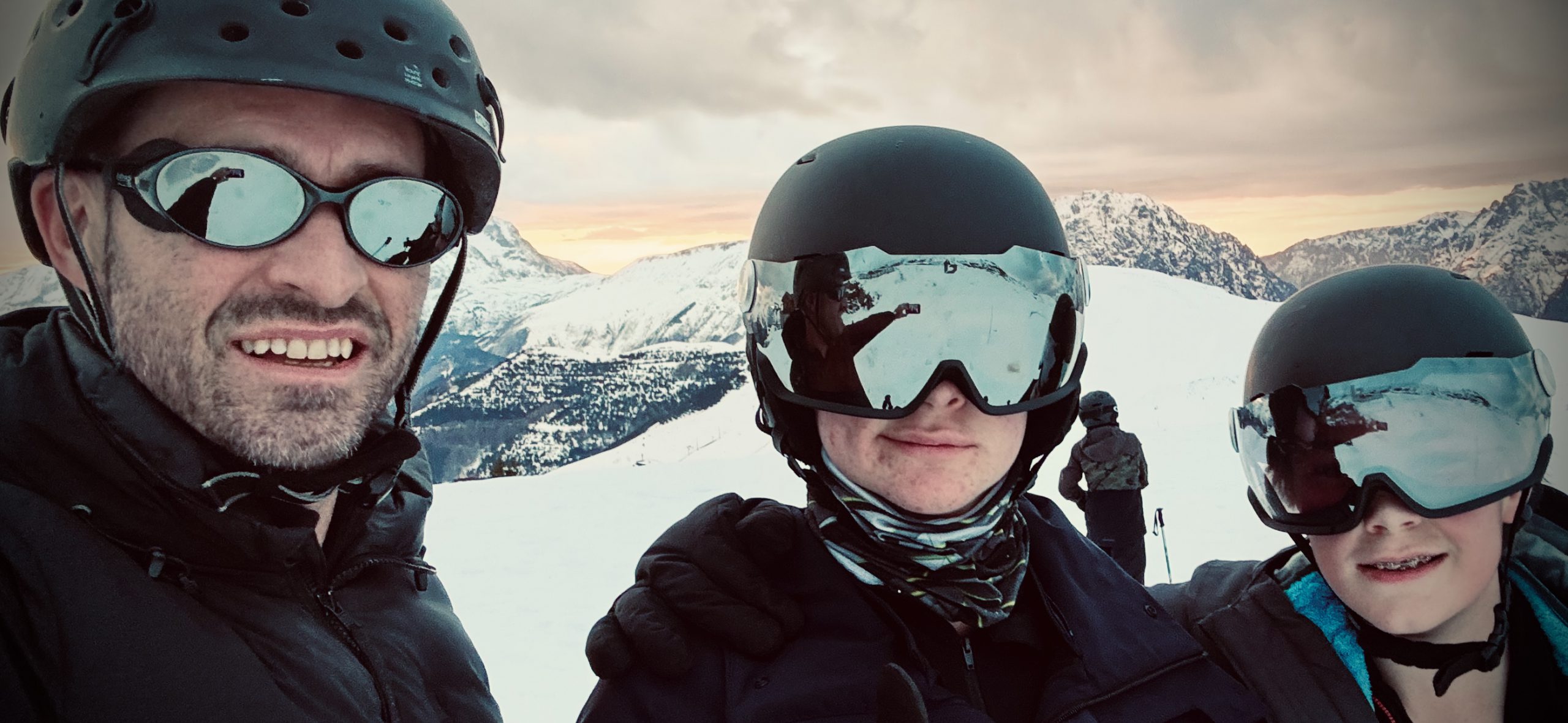
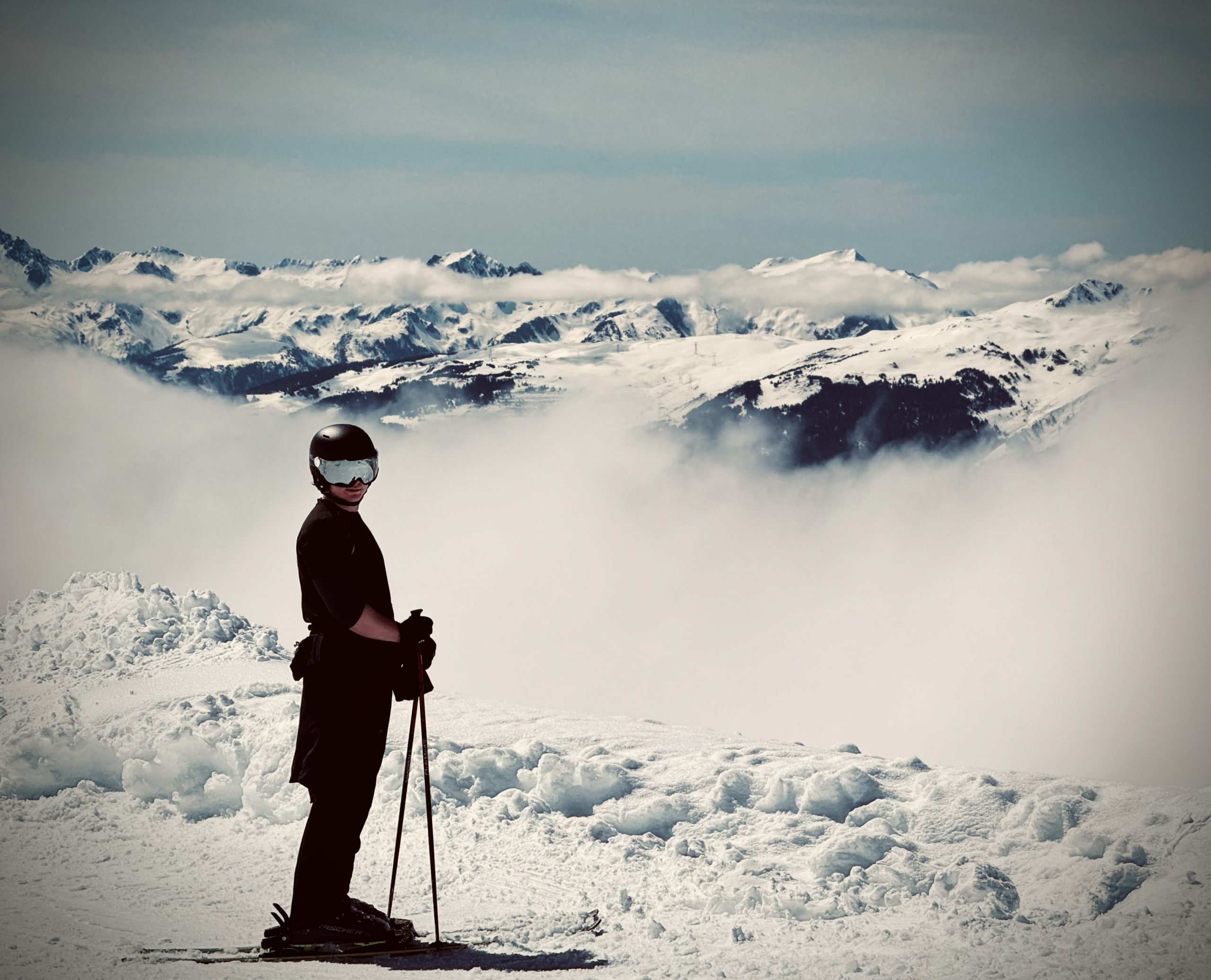
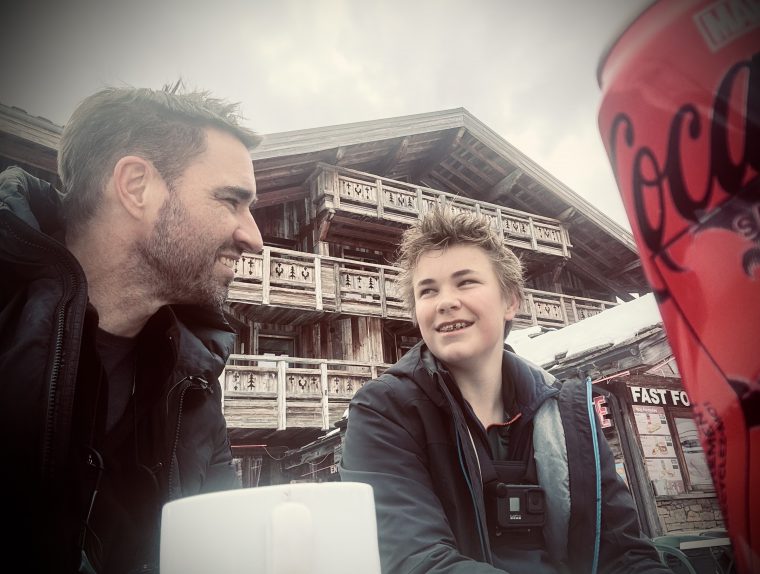
The Ultimate Beginner Skier’s Guide to Les Arcs

Greg from SNO explains why Les Arcs is so good for beginners learning to ski:

I’ll be honest – when you first arrive in a top-tier ski resort like Les Arcs and see the sheer scale of the place, it’s a bit overwhelming. Four villages scattered across a mountain face, 425km of pistes disappearing into the distance. My first thought when I came all those years ago was “have I made a terrible mistake?”

But after loving it myself and subsequently hearing from so many clients who’ve learn here over the years, I’m convinced it’s one of the best places in the Alps to find your ski legs. And that’s not just resort PR speak.
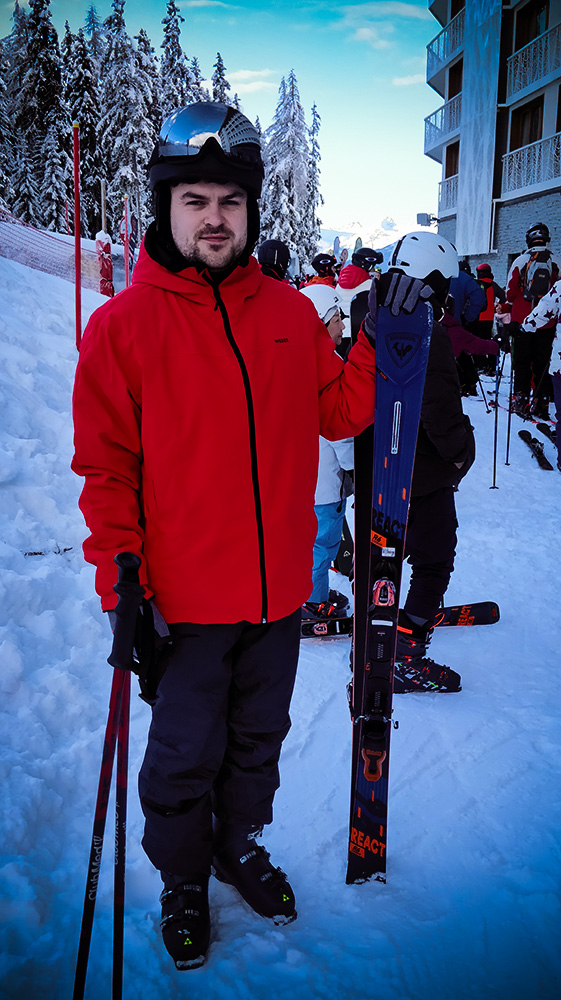
Greg gets his beginner skis in Club Med Les Arcs

The biggest thing that blew me away is that they’ve got 11 lifts you can use without buying a pass. Eleven! My mate’s sister spent her first three days just pottering about on these, getting comfortable before committing to a full pass. She saved herself over a hundred pounds and all the pressure that comes with feeling you need to “get your money’s worth.”

Then there’s Mille8 at Arc 1800. When they spent €36 million on a beginner area, some thought they’d lost the plot. But seeing pics of a client’s kids discover skiing there last winter changed my mind completely. Where else can you ski until half seven in the evening, play a giant xylophone with your ski poles, and even go for a swim? It transforms those first wobbly days into something genuinely fun.

The altitude helps enormously too. Starting at 1,600m and going up to 2,120m means proper snow from December through to late April. I’ve seen too many beginners struggling on icy morning slopes in lower resorts – it’s miserable and knocks confidence. Here, you get consistent, forgiving snow that makes learning so much easier.

And because Les Arcs was purpose-built in the 60s and 70s (rather than growing organically from an old farming village), everything just… works. No hobbling through medieval streets in ski boots. No getting lost trying to find the lift. It’s logical, which matters when you’re already dealing with the nerves of strapping planks to your feet.

The 421+ ESF instructors here really get British beginners. They understand we need encouragement rather than that Gallic shrug when we’re face-planting for the tenth time. Most speak decent English and know when to suggest a coffee break before we have a complete meltdown.

Each village has its own personality and learning environment. Arc 1800 with Mille8 is brilliant for complete beginners. Arc 2000’s high bowl is perfect when you want space to practice. The tree runs down to Peisey-Vallandry are where you’ll build real confidence in your second week.

One thing worth knowing – more than one person thought the blue runs here are slightly steeper than places like La Plagne next door. But I didn’t think so – maybe it’s like the difference between learning to drive in Milton Keynes or London?
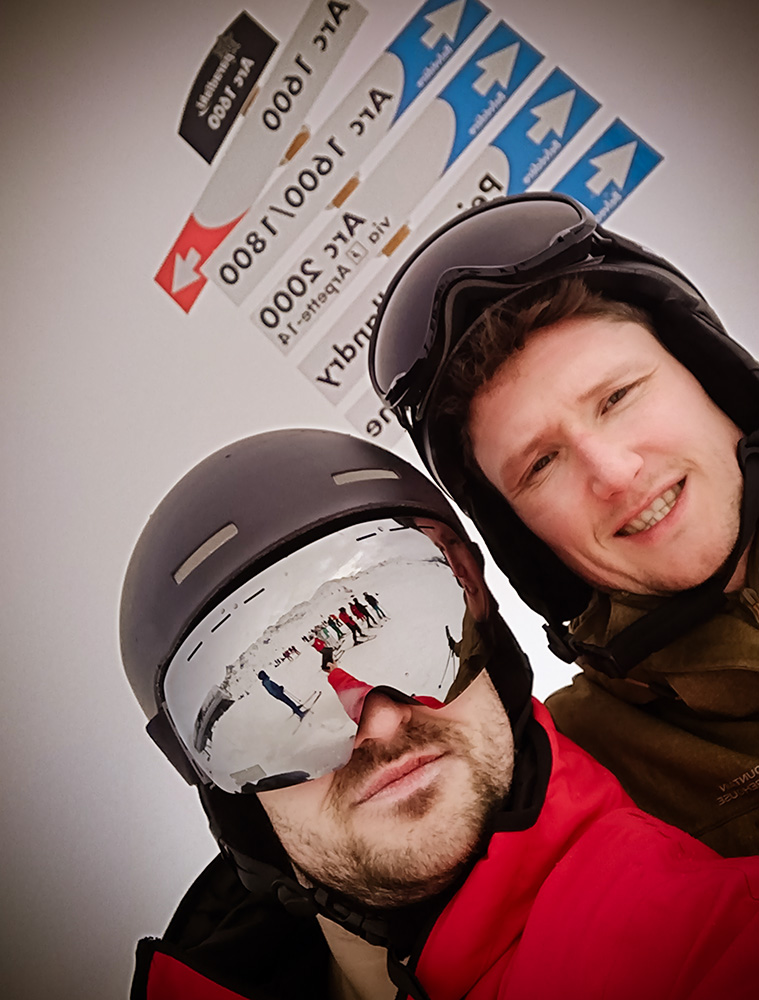
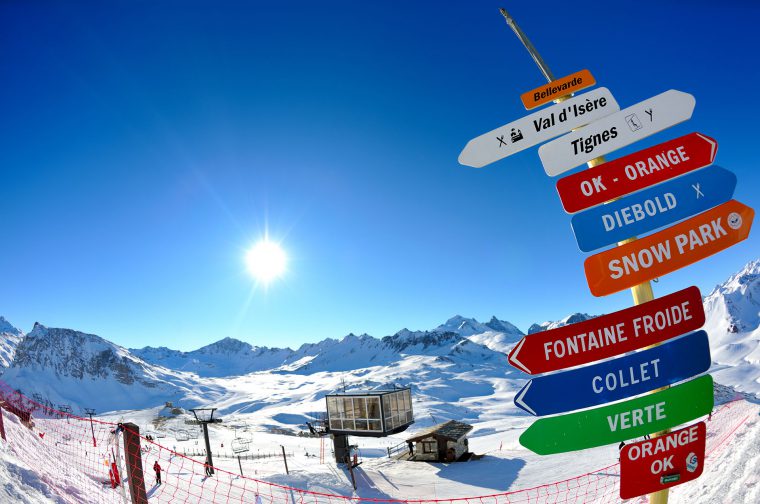
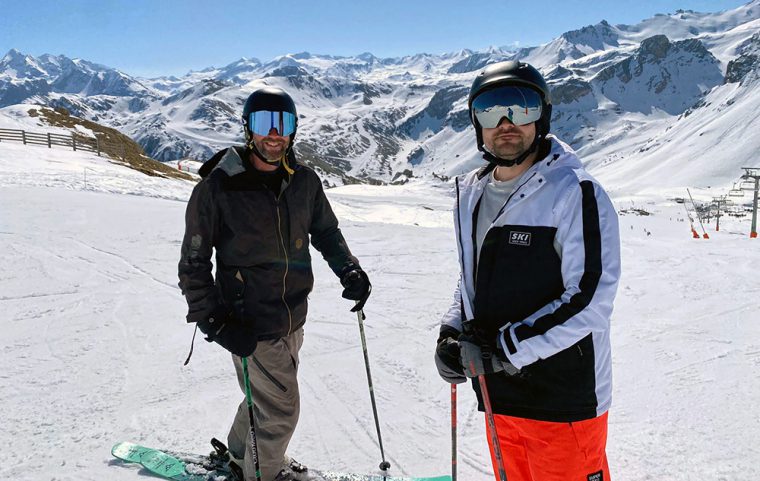
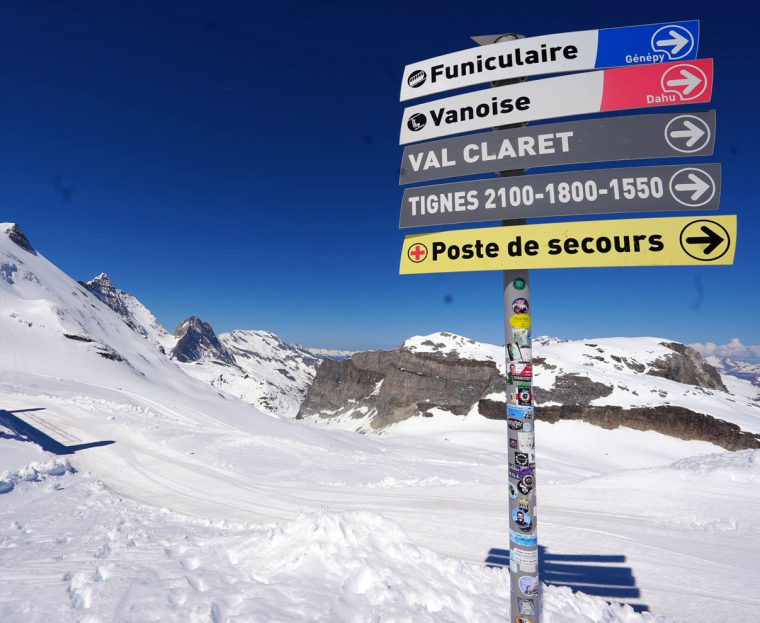
Behind Greg are the piste signs to each Les Arcs Village

Breaking down the villages – where to base yourself

Arc 1800 – Where most beginners should start

This is where I send nervous friends. Always. The Mille8 complex has transformed what was already a solid beginner area into something special.

You’ve got two dedicated green runs with magic carpet lifts that couldn’t be gentler if they tried. Le Cube is so mellow you’ll wonder if you’re actually moving. The forest run with those wooden cabins and the xylophone is where you’ll have your first “I’m actually skiing!” moment. Being able to practice until 7:30pm under floodlights is genius – miss the morning carnage completely.

The old Jardin des Enfants area still works brilliantly too. Right at the front of the village, wide as a football pitch, with a free drag lift that’s been initiating beginners since the 70s. Once you’re ready to move on, the Villards gondola whisks you up the mountain without any nervy chairlift-dismount-drama.

Pro tip: Go to Mille8’s magic carpet at 9am when the groomers have just finished. There’s nobody about for a few peaceful minutes, and the snow is perfect corduroy.

Arc 1950 – For those who like their comfort

Don’t write off 1950 just because it’s got a slightly posher reputation. Yes, it’s swish, but the two village beginner slopes are excellent and wonderfully quiet. The magic carpet is literally outside most of the apartments, and there’s a rope tow for when you’re ready for something longer.

Being car-free and pedestrianised takes so much stress away. Everything’s within stumbling distance. The ski school groups can be smaller (if they charge more, fewer people book them), which can mean more personal attention. And you’re perfectly placed to nip over to either Mille8 or Arc 2000’s wider slopes when you’re ready to explore.

Downside? You might outgrow the village slopes pretty quickly. But by then you’ll have found your feet in a calm, beautiful environment. Sometimes that’s worth paying for.

Arc 2000 – Best snow, guaranteed

Sitting at 2,120m (yes, higher than the name suggests – don’t ask me why), Arc 2000 has the best snow in the resort. The wide bowl catches the sun but somehow keeps great snow all day. Must be the altitude.

First easy/green runs at the bottom of Reservoir piste and I think you will get onto blues quickest in Arcs 2000. Plan Vert and Edelweiss are about as gentle as blues get, and the St Jacques chair (free on Saturdays) serves slopes so wide you could land a plane on them. Having multiple ways down means choosing your comfort level rather than being funnelled into something scary.

They’ve got four free lifts scattered about, including the Eldorador and Rhodos drags that hardly anyone seems to know about. The views across to Mont Blanc on a clear day make even the most dramatic tumbles worthwhile.

Arc 1600 & Peisey-Vallandry – For your second week

These lower villages are sometimes thought less ideal for absolute beginners, but come into their own once you can link turns. I’m not sure I agree because the trees provide shelter on grotty days, and there’s something confidence-building about skiing through forests.

The Forêt run from Peisey is legendary – 7km of gentle cruising through the trees. It’s one of Europe’s longest easy runs and builds stamina like nothing else. My record is doing it six times in a day, though my legs didn’t thank me.

Arc 1600 has lovely rolling blues through the trees. The Cachettes and Vezaille chairs let you lap manageable terrain without getting bored. Fewer Brits here too, which gives it a properly French feel.
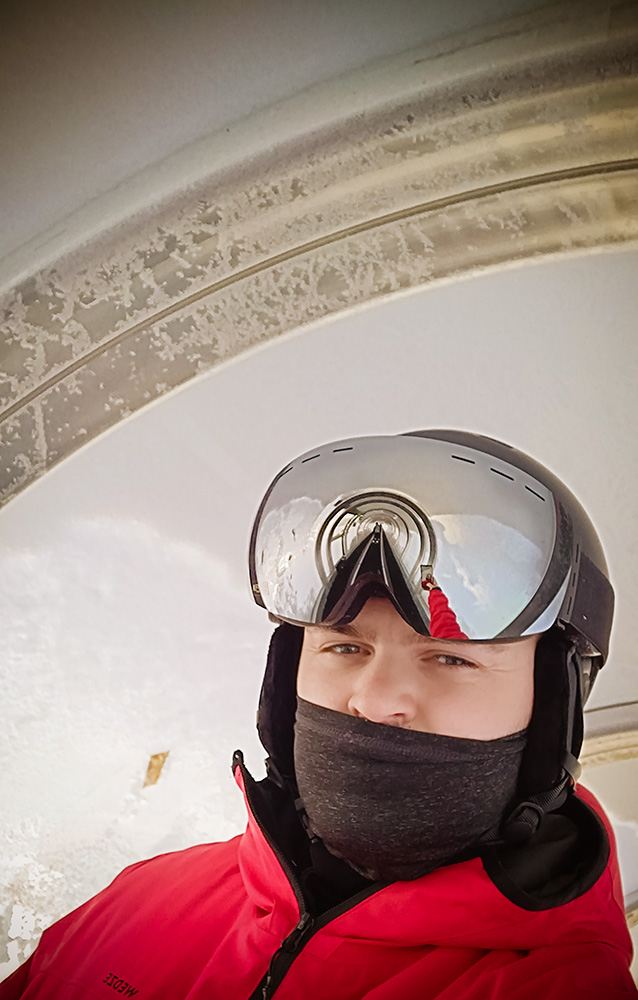
Greg inside the tunnel of a Les Arcs magic carpet – getting warm between runs

Your first week – what really happens

Days 1-3: The humbling

Day one is all about boots. Get this wrong and you’re stuffed. Too tight and you’ll be crying by lunch. Too loose and you’ll have no control whatsoever. Take your time. Walk around the shop. Do some lunges. Yes, you’ll look silly. No, it doesn’t matter.

Your first lesson starts with walking about on flat snow, which is harder than it sounds. Then some sliding. Then the inevitable first fall. The instructor will show you how to get up, which involves a lot more core strength than you’d think. By lunch, you’ll be doing “pizza” turns on a gentle slope and wondering why your thighs are on fire.

Day two is when the magic carpet really comes into play. You’ll face-plant getting off it at least once. Everyone does. By the end of the day, you’ll be linking turns and feeling somewhat in control. The free lifts mean you can practice and learn in these small areas without the cost of an all-mountain ski pass.

Day three sees most people venturing onto an easy blue slope, but instructors won’t rush you into it. It’ll feel impossibly steep at first and your pizza wedge will be enormous. But you’ll get down, and the grin will be unstoppable.

What nobody tells you:

  • Your thighs will burn like never before (it gets better, promise)
  • The fear of losing control is normal and passes
  • All the gear feels alien at first – stick with it
  • Everyone’s too focused on their own skiing to watch you fall

Days 4-6: The breakthrough

Something clicks around day four or five. You’ll start bringing your skis parallel at the end of turns. You’ll feel your edges gripping. A rhythm develops. For most people, day five or six brings that eureka moment when parallel turns just… happen.

Now you’re ready for proper runs. The tree descent to Vallandry tested my stamina and Arc 2000’s bowl gives you space to play, with other beginners more spread out. It’s so cool when you stop and realise that chairlifts have become routine rather than terrifying.

My ‘SNO Pro Tip’ is to film yourself on day one, then again on day six. The transformation is extraordinary and does wonders for confidence when you see how far you’ve come.

Week 2: Becoming a skier

I guarantee you will love Les Arcs and that means you’ll come back – week two is where it gets properly fun. Parallel turns become your default. I loved exploring different villages, each has its own character, as my confidence to travel across the ski area grew. You can get everywhere on blues and, at the end of your second week, red runs stop looking impossible. You’ll start thinking about how you’re skiing rather than just surviving.

Les Arcs’ interconnected layout shines now. Morning in Arc 2000’s sun bowl, lunch in Peisey’s trees, afternoon playing at Mille8. The variety keeps it interesting while building different skills.
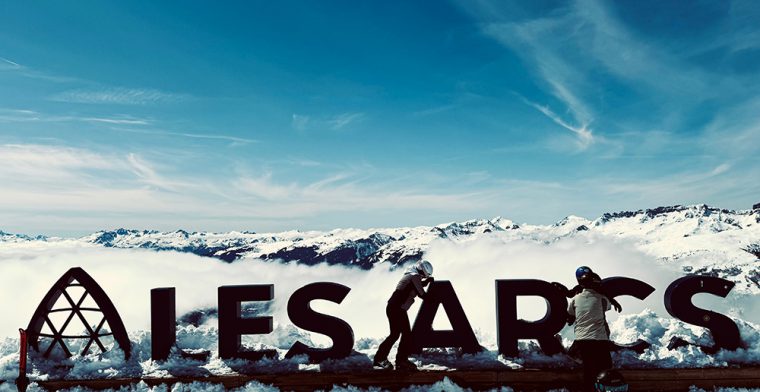
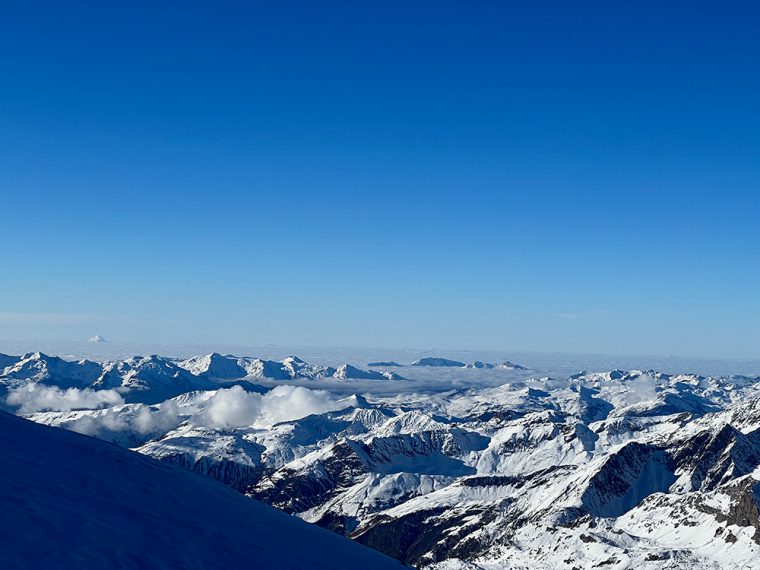
The view from the top is pretty jaw-dropping

Choosing your ski school

ESF – The French classic

With 421+ instructors spread across the villages, ESF is everywhere. Their ski évolutif method (starting on tiny skis and gradually going longer) sounds mad but works brilliantly. The British instructors understand our need for clear explanations and regular encouragement rather than Gallic indifference.

Group lessons run €165-220 for five mornings. You’ll have up to 12 in a group, though 8-10 is more typical. Morning sessions work best for me – better snow, more energy, and après ski to look forward to.

Private lessons (€70-90 an hour) can transform your skiing more quickly. I always recommend a couple early on to nail the basics, then joining a group for the social side. Watching others make the same mistakes is oddly reassuring.

Kids start at three in the Piou-Piou gardens, with full day programs (€300-400 a week) including lunch and warm-up breaks. Under-fives ski free – just show their passport at the ticket office.

Evolution 2 – The British touch

With 70+ properly bilingual instructors, Evolution 2 suits nervous English speakers perfectly. Maximum group size is eight, and they’re known for patience with adult beginners. Based at Arc 1800, they’ve got really easy access to Mille8.

Yes, they can be pricier than ESF but, if you’re nervous or want extra attention, it’s money well spent. Their kids’ programs are particularly good.

Kit – what’s worth buying and what isn’t

Must-haves:

  • Decent ski boots (though rental is fine initially – buy when you’re hooked)
  • Proper waterproof jacket and trousers (you’ll be sitting in snow a lot)
  • Good gloves – cold hands ruin everything
  • Ski socks – one pair, never double up
  • Base layers that actually wick
  • Neck warmer (that gap between jacket and helmet gets cold)
  • Helmet (confidence is everything)

Save your money and don’t buy:

  • Your own skis (rental shops have ideal beginner kit)
  • €300 goggles (€30 ones from Decathlon work fine)
  • Technical mid-layers (any old fleece does the job)
  • Anything with a luxury brand logo

Aldi and Lidl’s November ski wear is legendary among seasonaires. Complete outfits for under €100 that last surprisingly well. Decathlon is brilliant year-round. TK Maxx often has previous season’s designer stuff for pennies.

Tip: wear your base layers to the rental shop. Makes trying boots much easier. And photograph your binding settings… but do not adjust them yourself.

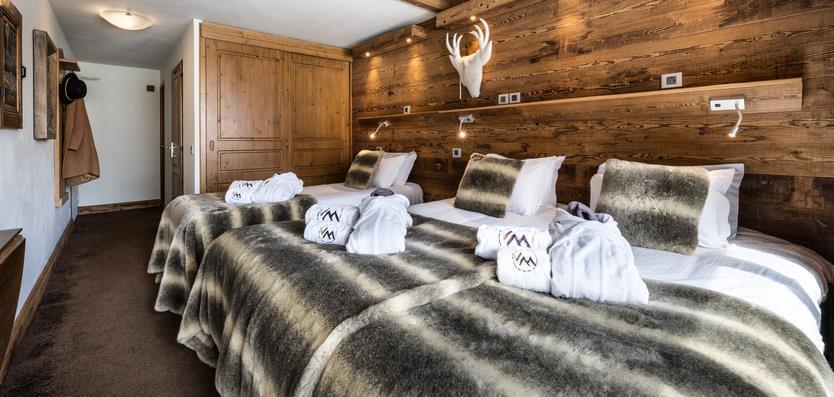
Greg stayed in the Les Arcs Club Med in Peissey where ESF instructors and your lift pass are included

What makes Les Arcs special for beginners

Mille8 – A proper game-changer

Some were sceptical when they built Mille8, as it seemed like an expensive gimmick, but it’s genuinely revolutionary. Skiing until 7:30pm means more time for learning (when everyone else is in the bar). The xylophone makes kids (and adults) want to ski the forest run repeatedly, and the boardercross course with video recording is really motivating.

Add the swimming pools, restaurants, and soft play, and non-skiing family have plenty to do. It solves that problem of mixed groups where some are learning and others are bored.

Those free lifts

Eleven free lifts change everything. You can faff about all day without buying a pass, only committing when you’re ready for steeper slopes. They’re strategically placed (so there’s always one nearby) and brilliant for building confidence without the cost.

Les Arcs areas help natural progress

The resort layout creates perfect skill progression. From the village magic-carpets, to free lifts, to easy chairs, to the full domain. Each stage has lots of options, so I never got bored doing the same run repeatedly. It’s thoughtfully designed in a way that old-fashioned resorts can’t match.

Reliable snow

Minimum 1,600m altitude rising to 2,120m means proper snow when lower resorts are struggling. The north-facing bowl above 1950 and 2000 holds snow even in warm spells. Nothing worse than learning on ice or slush – here you get forgiving snow all season.

My secrets for faster progress

Book afternoon privates – they’re 20% cheaper and it’s warmer. Do group lessons in the morning for the social element, then a private after lunch to fix specific problems.

Video analysis transforms understanding. Most instructors offer it now. Seeing yourself ski can show you things that no amount of explanation can convey.

Each village offers different challenges, so I use the different areas for different skiing. I love Arc 1800 for the fun features, Arc 2000 for wide open space (to go a bit faster), Vallandry for (quiet/chilled) cruising through the trees. Variety builds adaptable skills faster than hammering the same run.

That boring blue you’ve mastered? Perfect for working on technique without survival stress. Do it switch. Do it on one ski. Do it looking only where you want to go. These games build skills remarkably quickly.

Dehydration at altitude kills coordination. Minimum one litre per session, more if it’s sunny. Those headaches aren’t from the altitude – you’re just parched. I always top up with a little afternoon après ski too 🙂

Celebrate everything. First parallel turn. First red run. First full day without a major stack. Your progress comes in jumps up to a little moment of nailing something slightly harder. When I recognize the small wins, it really keeps my motivation high.

Everyone’s different. I’ve seen naturals parallel on day three and others take two weeks. The timeline doesn’t matter. The journey does.

Just go for it

Les Arcs combines proper beginner infrastructure with reliable snow and thoughtful design. For me, the combination of free lifts, innovation at Mille8, and loads of mellow/beginner terrain, creates ideal learning conditions. From xylophone forests to floodlit evening sessions to tree-lined adventures – this is skiing as it should be learned. As an experience, not an endurance test.

The bottom line? If you want to go from complete beginner to confident skier efficiently while actually enjoying yourself, Les Arcs delivers. We all start somewhere. In Les Arcs, that somewhere happens to be rather special. See you in the bar after – I’ll be the one with the massive grin and slightly singed thighs.

For help choosing and booking your ski holiday in Les Arcs, browse the package ski deals or give me and the team a call 020 7770 6888.
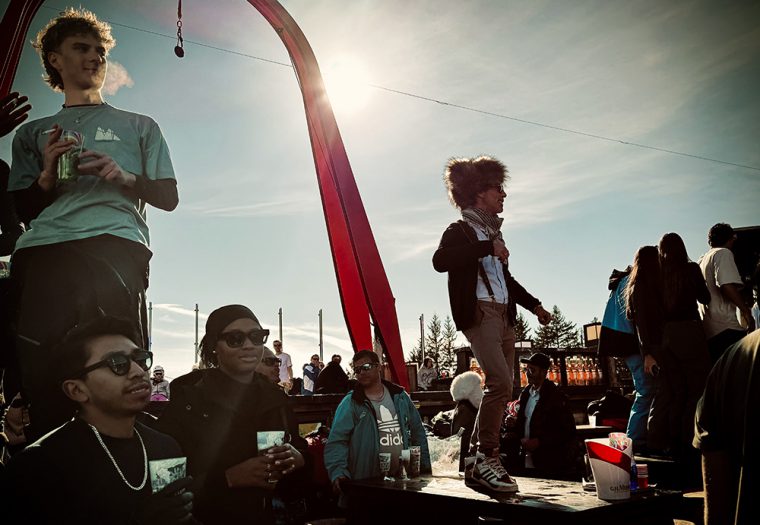
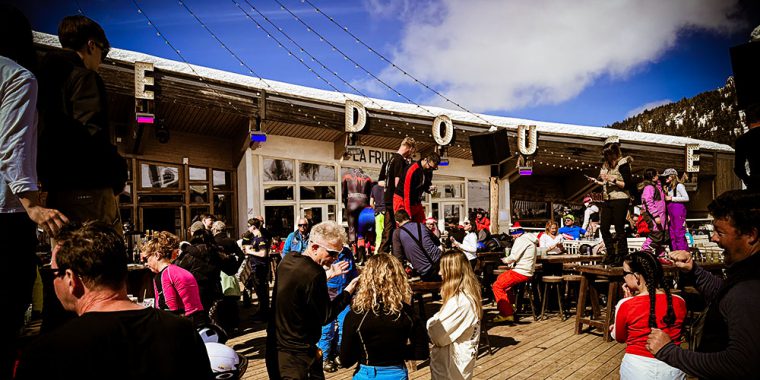
The Ultimate Guide to Les Arcs Après-Ski Bars & Nightlife

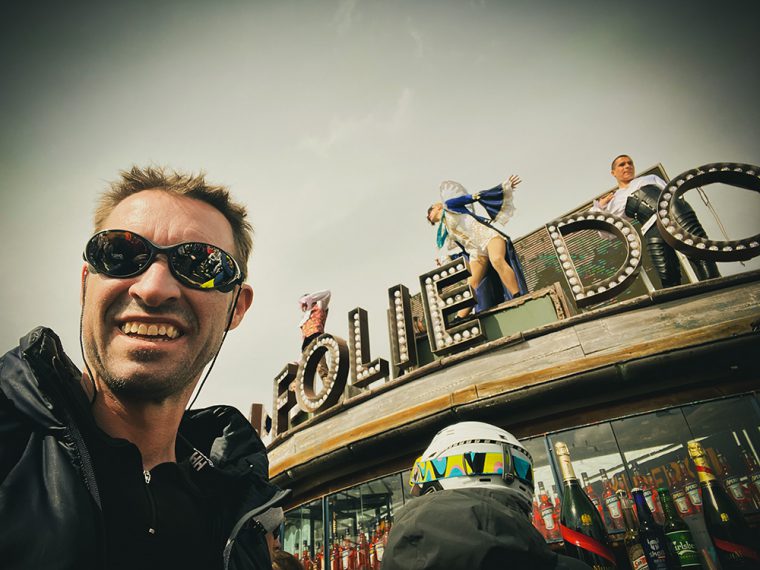
After too many winters skiing and partying in Les Arcs, I’ve discovered this sprawling resort hides over 60 bars across five villages, from €5 vin chauds in Peisey to 6am carnage in Arc 1800. My son even popped is Follie Douce cherry here (pics below). We love it.

The trick (apart from a mate on the Apokalypse door) is knowing where to go when the lifts stop spinning, so here’s my ultimate guide to Les Arcs apres ski bars and nightlife:

Les Arcs après ski does not disappoint

You Need To Know Les Arcs Villages To Know The Nightlife

The genius of the Les Arcs social scene is its variety. While Arc 1800’s Apokalypse pumps out bangers until sunrise, your nan can be sipping champagne in Arc 1950’s O’Chaud. In Arc 2000 powder hounds can party hard, and trad Savoyard villages like Peisey have local French bars where pints are cheap.

Each village has evolved its own personality so it’s useful to pick your Les Arcs ski holiday according to what type of off-slope vibe you prefer. Arc 1800 is party central, whereas Arc 1950 is purpose-built pedestrianised and slightly posher. Arc 2000 is up in ski-in ski-out territory, if you value ski over après.

My Village-by-Village Les Arcs Breakdown

Arc 1800 (30+ venues)

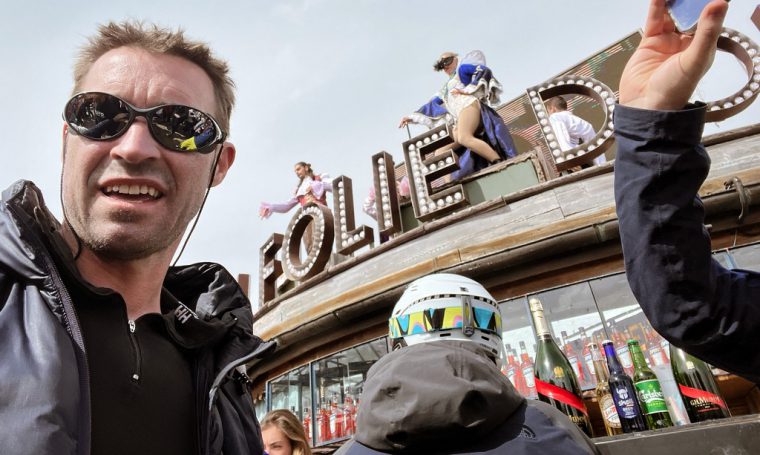
La Folie Douce is just above the village so take the Villards gondola or Dahu cable car up (the Dahu is usually less rammed). We love being among the 2,000 punters, watching cabaret performers while DJs get our tired ski legs going again. It’s de rigueur to dance on the tables (see pic of my boy Jimmy below). Folie is open 9am-7pm (8:30pm Wednesday to Friday) and about €28 for burger and beer or €15 for a mojito. But what price watching someone in sequins do the splits on the bar?

Back in Villards, the square gets busy by 3pm. I like Red Hot Saloon but the SNO team say Jungle Café is where it’s at. The décor might be from the 80’s but €6 cocktails (genuinely the best value in resort) until 1am is unbeatable.

Bar King Mad (BKM) owns the massive terrace where pizzas (€12-15) are tasty. We last visited 9pm on a Thursday and the DJ was so good we stayed until closing.

For proper debauchery, Apokalypse opens at 11pm to three floors where you can literally find your level. The ground floor is cheese-fest and chart hits. The first floor is more like RnB and the top floor is techno. There’s free entry before midnight, but you need to queue by 11:45, then it’s €15 after 12.

Charvet offers a bit of refuge, where Chez Boubou has a proper fireplace, live bands, and tartiflette (€18). The Scandinavians come here a lot and downstairs Club 73 stays open until 4am.

SNO Pro Tip: Staying in Charvet avoids the Villards scrum, so start at L’Ambiente during happy hour (4-6pm, half-price pints), grab dinner at Chez Boubou, before picking one of the late bars above.

We help each other onto the tables, to dance with Spiderman!

Arc 1950 (Sophistication Meets Shots)

I think Arc 1950 was built to be Courchevel’s younger sister. Pedestrianised, pretty, but still busy after dark.

Les Belles Pintes Irish pub dominates the village centre with live music every night, pool table upstairs, and sports screens. Happy hour (4-5pm) halves the price of everything, but we try to arrive early because it’s rammed by 5pm.

Chalet de Luigi is a restaurant upstairs but we go for Club 1950 in the basement. The terrace is good for judging comedy skiing, while nursing an Aperol Spritz (€12).

O’Chaud Lounge is where Les Arcs does cocktails and the place transforms into a proper club after midnight until 3am. €15-18 cocktails for people who iron their salopettes.

I really recommend George Brown’s Wine Bar – it’s a five minute walk to hear George strumming guitar and to sample his 80+ wine selection.

Arc 2000 (High Altitude Heightens The Alcohol)

El Latino Loco occupies the entire fifth floor of Residence Aiguille Rouge. A lot of SNO clients book into the Aiguille Rouge for their ski holiday accommodation, so it can be a really convenient place to go out too.

Whistler’s Dream has €4 pints during happy hour (4-7pm) but I haven’t been there in years. Let me know what it’s like now, if you go here.

The Igloo Village is something really different – a hand-carved ice bar serving drinks in ice glasses. Entry is €5 (€4 kids, free under-6s) and drinks are around €8-10 but it closes at 5pm. Greg from the SNO team loved the fondue experience (€45pp) but said “remember you’re eating in a fridge”.

The Taj-I-Mah Hotel Lounge is in Les Arcs’ five-star hotel and is maybe the poshest bar in resort. The cocktails are €15-20 and the head barman creates his own special concoctions.

Arc 1600 (Surprisingly Civilised)

Some say the original Arc village is a bit quiet, but actually it’s just French. That means authentic locals’ bars, without the wild holiday atmosphere.

Bar L’Abreuvoir is in the heart of Place du Soleil with Live bands. With karaoke on Thursdays, happy hour (5:30-7:30pm) and a pool table, it’s the only bar open past midnight (1:30am).

Bulles by Champagne is really good value for phizz in a ski resort at €12 per glass and the people-watching is free.

Peisey-Vallandry (Real Alps, Real Prices)

British tour operators have colonised these villages, creating a weird Anglo-French hybrid that somehow works.

We Ski Bar in Peisey-Nancroix stays open until 2am serving cocktails (€8-12) that would cost double up the mountain. They’ve got an attached deli and live bands on Thursdays.

Mojo Bar in Vallandry’s Centre Commercial has DJs most nights.

Bar Mont Blanc is opposite the Grizzly lift with a big deck that fills by 3pm on bluebird days. Pool tables, comedy nights and Premier League matches.

Down in Peisey village, The Flying Squirrel does Sunday roasts (€18) and I think it’s the best place to watch Six Nations rugby. The Plan Peisey shuttle stops right outside.

Bourg Saint Maurice (Local Gems)

Twenty minutes down the mountain (€2 bus), the valley town rewards the adventurous. I know you can’t be bothered, but here’s where to go if you change your mind:

BC7 Restaurant & Bar at Base Camp Lodge combines Savoyard grub with regular gigs.

La Ruelle – only the French would think mixing Savoyard and Senegalese cuisine made sense. Fondue meets African spices might sound weird but I love it and their rum collection is worth the schlep.

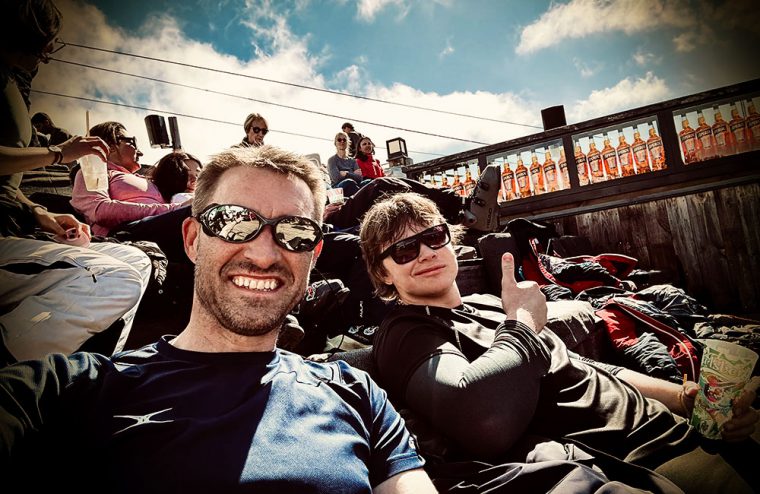
SNOman and son Jimmy enjoying Les Arcs libations

The Legendary Pit Stops

L’Arpette on-piste between Arc 1600 and 1800 has Wednesday soirées combining raclette (€35) with DJs and dancing on tables. The 9pm torch-lit descent back is spectacular but a bit tricky in the dark, if you’re a beginner or had a few too many.

My TL;DR Les Arcs Venue Guide

Proper Party Venues

La Folie Douce (cabaret meets clubbing at altitude), Apokalypse, Arc 1800 (3 floors, 6am finish) El Latino Loco, Arc 2000 (salsa at 2,100m), L’Arpette soirées (dinner, drinks, dodgy descent).

Traditional Après Spots

Chez Boubou, Arc 1800 (fireplace, Scandi atmosphere), Jungle Café, Arc 1800 (cheap and cheerful), Bar King Mad, Arc 1800 (sun trap), We Ski Bar, Vallandry (good cocktails and prices), George Brown’s, Arc 1950 (owner plays guitar), O’Chaud Lounge, Arc 1950 (best cocktails), Taj-I-Mah Lounge, Arc 2000 (poshest), Bulles, Arc 1600 (cheap champagne)

Family-Friendly (But Still Fun)

Bar Casual, Arc 1800 (games for kids), Igloo Village, Arc 2000 (drink from ice glasses), Bar Mont Blanc, Vallandry (sun deck, games room), Bar L’Abreuvoir, Arc 1600 (family evenings), Les Belles Pintes, Arc 1950 (Irish bar, live music), Chez Boubou, Arc 1800 (proper bands), BC7, Bourg Saint Maurice (valley prices)

Bar Prices In Les Arcs

I won’t pretend Les Arcs is cheap, but going out here costs less than bars Val d’Isere. Beer from €6-12, wine is €8-15 glass, and cocktails from €12-18. And you can do a lot to make it affordable, so here are my wallet-saving tactics:

  • Jungle Café and BKM are the cheapest in Arc 1800.
  • Valley venues have local prices, and are worth the trek.
  • Happy hours are usually 4-6pm or 5-7pm and save a lot.
  • Hotel du Golf’s Bar Casual is good value and less busy.
  • Apartment pre-drinks are still the champion money-saver.

Seasonal Intel’ And When To Visit

December: It’s relatively empty, so early-season in Les Arcs is perfect for getting served.

Christmas/New Year: For this really busy time, book everything before you go, especially for NYE. Apokalypse NYE party (€30 inc. champagne) is really great but you need to book it weeks in advance.

January: The bargain hunters (like me) arrive, and the bars need customers so happy hours can be longer.

February Half-Term: British school-holidays invasion is so busy, as Arc 1800 is the top family ski resort.

March: Sweet spot with good snow, terrace weather, and sunny afternoons that lend themselves to après.

April: Spring skiing mayhem. La Folie Douce extends hours, everywhere is mental until the last lift stops.

Les Arcs Tips For Getting Home Safely

The Cabriolet between Arc 1950 and 2000 supposedly runs until 11:30pm but don’t bank on it. Walking takes 15-30 mins, so beware of the cold if you’re wandering home wet and sweaty after the club.

Arc 1800 stretches 2km between Villards and Charvet. Free bus stops at 8pm, then it’s shanks’ pony or €20-30 taxis.

Want to visit other villages? Generally I would say you’re sleeping where you’re drinking, unless you arrange transport beforehand.

Where to Base Yourself In Les Arcs For Great Nightlife

Party animals like Arc 1800 Villards because everything you could want late at night is there.

Sophisticated sorts pick Arc 1950 for its style and we love the late lifts to Arc 2000.

Families use Arc 1600 or Vallandry as a calm base, with entertainment options.

Mixed groups often stay in Arc 1800 Charvet because it offers the best of both worlds.

Tight budgets could stay in Bourg Saint Maurice, to save a fortune, but miss most fun.

Snoman’s Insider Intel’ For Supping In Les Arcs

French instructors congregate at George Brown’s and L’Ambiente so I recommend following them if you want a local vibe. Seasonaires love the Jungle Café and Whistler’s Dream because drinks are cheaper and the atmos is lively. The Scandis own Chez Boubou now and Greg from the SNO office says it’s great.

Le J.O. Bar shuts just as bands get good. Apokalypse top floor plays better tunes than the main room. O’Chaud makes proper cocktails but charges accordingly.

Wednesday = Les Arcs’ biggest night. L’Arpette soirées, extended Folie Douce madness, everywhere busier. Sunday nights? Dead as disco everywhere except Arc 2000.

The Bottom Line

Les Arcs isn’t one ski resort, it’s five different worlds, connected by lifts and pistes. Master the geography, set your phone alarm for the happy hours, and you’ll uncover one of France’s most diverse après scenes.

The Ultimate Guide to Val d’Isère Après Ski Bars & Nightlife

Val d’Isère’s après ski and nightlife isn’t just legendary, it’s the stuff of ski holiday folklore. From 2,400m mountain parties on the slopes, to underground techno clubs, this Alpine powerhouse delivers non-stop action that starts when the first afternoon rays hit the slopes and doesn’t quit until the breakfast croissants arrive.

In my last two decades skiing and partying here, I’ve tried and tested (tasted) the lot – champagne-soaked cabaret shows, Viking-themed pub crawls, sophisticated wine bars with roaring fires – Val d’Isère serves it all with a side of altitude and attitude. Like its more affordable neighbour Tignes, the resort’s geography creates variety. Everything concentrates between the main Val Village, La Daille, and Le Fornet, connected by free shuttles that run until 2am. No wonder seasoned skiers plan entire trips around the après ski here.

Snoman at La Follie Douce in Val d’Isere

Whatever the time of day or night, and no matter the vibe you’re looking for, I’ve got you covered. Here’s my ultimate guide to VDI après and night life:

Mountain & Slope-Side Après Ski (2:00 PM – 5:00 PM)

Legendary Venues

La Folie Douce    Perched at 2,400m above La Daille, La Folie Douce has achieved mythical status in the après ski world. This isn’t just a bar – it’s a full-scale production featuring cabaret dancers, acrobats, and DJs spinning French house to 800 people. We always dance on the tables in ski boots.

The madness officially kicks off at 3pm with their legendary show, but we always book lunch tables before 2pm to ensure a place. Yes, the €8 beers and €15 cocktails sting but, when you’re watching can-can dancers perform at altitude while champagne rains down from the terrace, price becomes irrelevant. My enduring memory is of legendary compere Kelly Starlight sashaying across the stage dressed as Tutankhamun amid a dozen scantily clad female pharoah dancers… you get the picture.

Getting there couldn’t be easier – take the La Daille gondola and follow the bass-drum. Getting down after several hours of “Folie fun” requires more caution. The resort’s rescue services know the 5pm descent well, having scraped many overconfident revellers off the Face piste.

SNO Pro tip: if you’ve fully embraced La Follie experience, arrange a sober guide or take the gondola down.

Their “WTF Wednesdays” have become the stuff of legend, with themed parties that get progressively wilder as the season progresses. One regular described witnessing “a Russian oligarch order 20 bottles of Dom Pérignon, then spray half of them over the crowd while the DJ played the national anthem.”

Cocorico    While La Folie Douce grabs headlines with theatrical excess, Cocorico delivers the purest ski-in, ski-out après ski experience in the Alps. Positioned perfectly at the bottom of the OK piste below the Solaise bubble, you can literally ski to the bar – allegedly several patrons have overshot the entrance and ended up in the kitchen.

The venue’s genius lies in its transformation. At 1pm, families tuck into reasonably-priced tartiflette. By 4pm, those same tables groan under the weight of dancing Brits and Scandinavians – discovering 3-5pm happy hour makes Val d’Isère prices almost reasonable. The 400-capacity terrace reaches maximum chaos on sunny March afternoons when the DJ drops Swedish House Mafia and the entire crowd erupts. The table-dancing tradition started organically but now it’s mandatory by 4:30pm.

Classic Slope-Side Spots

L’Ouillette (2,300m)    Just below the Madeleine chairlift, L’Ouillette combines serious mountain dining with serious partying. The terrace has terrific views across to La Grande Motte glacier, while inside, the restaurant serves all the Savoyard classics the SNO team love.

The DJ transforms it from lunch to party venue at 3pm and by 4pm fur-clad Russians dance alongside seasonaires spending their week’s wages on overpriced rosé. The BBQ on the terrace draws crowds. I recommend their ‘special’ vin chaud (spiked with local génépi).

Le Signal (Le Fornet, 2,480m)    Recently crowned “Best Mountain Restaurant in Europe,” Le Signal deserves mention if you prefer quality over quantity. Not a party venue per se, but the wine list and truffle menu create their own kind of afternoon intoxication. Signal is really popular so book ahead.

Bar de l’Ouillette    Not the same as L’Ouillette restaurant, the bar is on the piste with a south-facing terrace. The vibe is relaxed, attracting an older crowd for good wine and the ability to hear conversation. The cheese fondue pairs well with afternoon drinking.

Village Centre Après Ski Bars (4:00 PM – 8:00 PM)

Best For Happy Hour

Le Petit Danois    From 8am to 2am, Le Petit Danois (or “Le Petit D” to locals) has anchored Val d’Isère’s nightlife for three decades with this genius formula: Viking-themed décor, massive portions, and the most generous happy hours in town (4-5pm and 9-10pm).

Mornings are great for full English breakfast (authentic Danish bacon) and by 4pm the music and Mutzig beers flow. I recommend coming at 10pm, crammed in for the live band in a sweaty, joyous mess. Famous toffee vodka shots are handed out free to pretty much anyone who asks nicely. We have launched a thousand bad decisions here.

I love this review: “Went for breakfast, stayed until 2am. Don’t remember much after the third round of toffee vodka, but apparently I sang Wonderwall with some French ski instructors. 10/10 would recommend.”

Saloon Bar    The Western-themed décor is cowboy kitsch, but the crowd is all Alpine. Seasonaires on their night off, students stretching budgets, and the odd stealth-millionaire.

Happy hour (4-7pm) has among the best deals in town, so it’s rammed by 4:15pm. The music is “whatever makes people drink more,” from country classics to Euro techno. My team like Saloon for the pool tables and sports screens.

Victor’s Bar    Victor’s can bridge afternoon skiing and evening mayhem with a sports bar atmos’. A British crowd, drawn by Premier League matches and proper pints (find Jack from SNO watching Arsenal).

I recommend their “Survival Burger” if you’re hungover.

More Sophisticated Options

La Taverne d’Alsace    If you want a break from techno and tequila, La Taverne oozes old-school Alpine charm. Exposed beams, roaring fires, and a really good wine list. Earn their superlative fondue, after a day battling the Vallée Perdue.

The crowd is older and more refined but, by 10pm, even the Swiss bankers are swaying to accordion music. ‘Explore’ the Alsatian wine selection  – the Rieslings go down easily at altitude.

Hotel Bar Circuit    Val d’Isère’s luxury hotels welcome non-guests. Le Blizzard Hotel’s bar has a huge fireplace and they make a terrific Old Fashioned, albeit €18. Watch snow fall past the window to a jazz piano soundtrack.

Le Tsanteleina’s M Bar mixologists treat each drink like a chemistry experiment but, when you’re paying €22 for a Martini, the theatre feels appropriate.

La Daille & Le Fornet Venues

La Daille Nightlife

Les Tontons (Bar des Tontons)    The ground floor is a buzzing sports bar and upstairs becomes a club after 10pm. It’s where La Daille’s season-workers drink. Wednesday live music sessions pull serious talent, but the reasonable prices reflect local rather than tourist budgets.

Rosée Blanche    At the bottom of the slopes I found what many claim is “the best vin chaud in the Alps.” The recipe is secret, but locals claim they taste honey, star anise… try it and tell me your opinion.

The sunny terrace makes it a nice stop after Folie Douce. Evening live acoustic sets provide relief from electronic beats.

Le Samovar Hotel Bar    A refined drinking experience with crackling fireplace, leather armchairs and the top-drawer cognac selection. Wednesday jazz nights are my fave.

Le Fornet Authentic Experience

Arolay Restaurant Bar    Le Fornet village has kept its authentic Savoyard atmos’ and I love the Arolay Restaurant’s for the local prices, local faces, and local génépi.

Evening dining is a blast from the past, with French families and old-timers, and a house red wine costing half that in Val Village.

Cable Car Station Bar    The main ent’s hub in Le Fornet is by the cable car station. Music includes French classics and the décor hasn’t changed much, which is why I love it.

Free shuttles run until 2am back to the main resort.

Evening Bars & Pre-Club Venues (8:00 PM – Midnight)

Live Music Venues

Le Lodge    One of the best for live music, hosting local French bands and touring British acts plus DJs.

Blue Note Bar    Lou and Matt’s claim to fame is the “Blue Note Challenge”. Finish their signature cocktail menu in one night and win… well, I’m not quite sure, because nobody’s managed it.

Coin des Amis    A tiny local’s favourite tucked down a side street with capacity for maybe 30 people, Coin des Amis is the anti-Folie Douce – intimate, authentic. Jules is a retired ski racer who pours génépi with a heavy hand. Conversation and liquor, Chez Jules is where locals, ski instructors and seasonaires relax.

Cocktail & Lounge Scene

L’Atelier d’Edmond    Michelin-starred chef Edmond Vatan opened this cocktail bar adjacent to his restaurant. The mixology rivals Paris or London, with bartenders trained by the world’s best.

I recommend the “Altitude Adjustment” (gin, Alpine herbs, champagne foam) famous on Instagram at €24. Crowd is successful 30-somethings who’ve graduated from Jägerbombs (so not me then…)

Cave de la Maison    For the serious oenophile, with the cellar stocking 400+ bottles. Natural and ‘biodynamic’ wines paired with cheese and charcuterie. The sommelier Marie, from Paris, brings big-city knowledge to Alpine drinking. Her Wednesday tasting sessions sell out so book if you’re keen.

Late Night Clubs & Party Venues (Midnight – 5:00 AM)

Legendary Institutions

Dick’s Tea Bar    Since 1979, Dick’s Tea Bar has defined Val d’Isère’s nightlife and I keep going back. The subterranean institution underwent a €2 million renovation, expanding to 500 while somehow keeping its gloriously-dated atmosphere.

The formula doesn’t change. Eye-watering prices (€18 for a basic vodka mixer), music that stopped evolving in 1995, and arbitrary door policy. Yet somehow, at 2am on any given night, you’ll the great and the good, and seasonaires… and me… united in terrible dancing.

Celebrities love it – Prince Harry’s infamous night here in 2011 remains the stuff of legend. I heard the 3am tea service (actual tea, served in proper cups) started as a joke but I’ve not seen it.

Update: Oh no! It now seems the rumours that the last ‘closing down’ of Dick’s is going to be permanent, and it will now operate as a restaurant only. I didn’t quite believe it, as this place was supposedly closing several times over the years, but perhaps this time it’s for good. Watch this space!

Doudoune Club    Hidden beneath Place Jacques Mouflier, Doudoune brings proper underground club culture to Val. Big DJs like Pete Tong and Danny Howard for when you want quality over kitsch.

Entry fees vary wildly, from ‘free before midnight’ on quiet nights, to €30+ when big names play. Their New Year’s Eve party has become legendary, but tickets sell out by November, so ask the team when you book your ski holiday.

Underground & Alternative

Le Graal Club    An alternative to Dick’s and the drinks cost marginally less. Thursday student nights offer rare Val d’Isère value, though “cheap” is relative at €6/beer.

Krystal Nightclub    Krystal targets the Courchevel overflow.

Underground Café    A middle ground between pub and club, with DJ sets, but it has an ace up its sleeve. It’s one of few places serving food until 2am – their pizza is essential drunk-fuel.

My Insider’s Playbook

Pick One Of My “Perfect-Nights”

Ski Hard, Party Harder Route    Start with 2pm lunch at La Folie Douce, staying for the 3pm show and subsequent madness. Around 5pm, carefully ski down to Le Petit Danois for happy hour and stomach lining. After dinner (La Casserole for value, L’Atelier for splashing out), warm up at Saloon Bar before hitting Dick’s at midnight. The rest I’ll leave you to figure out yourself.

Sophisticated Evening    Sunset cocktails at Le Blizzard Hotel bar (alpenglow through panoramic windows). Dinner at La Table de l’Ours (Michelin ambition with Alpine tradition). Live jazz at Le Lodge before descending to Doudoune for quality EDM. End at Cave de la Maison for a nightcap. Not a Red Bull in sight.

Local’s Night    Coin des Amis for genepy, then bus to Les Tontons in La Daille where seasonaires drink. Late night means finding who has the after-party. Locations change, but asking the right bartender works.

Val Money-Saving Strategies

Happy hours are your friend, 4-5pm and 9-10pm at most venues. Le Petit Danois has maybe the best value but several bars provide free shots – toffee vodka at Petit D, welcome schnapps at La Taverne.

Eating on the mountain costs more, but in town, plat du jour specials are cheapest. I prefer worker-focused spots like Café des Sports.

Group Planning

Large groups need strategy in Val d’Isère to get everyone in together. e.g. La Folie Douce requires reservations for any hope of seating together. Dick’s has VIP packages and Doudoune takes table bookings for the mezzanine level.

Our mixed group has varied tastes, so we start together at versatile venues like Le Lodge or La Taverne, then split as the night goes on.

Seasonal Variations & Events in VDI

How Busy is Peak Season? Christmas and New Year’s in Val d’Isère is max-capacity and max-prices. Book everything you possibly can – restaurants, VIP tables, even Dick’s entry during New Year’s week.

February half-term is full with families by day, mayhem by night (when parents cut loose). There are some of the best DJ lineups and special events.

Special Events I Love “WTF Wednesdays” at Folie Douce get progressively wilder through the season. Themes range from tropical beach parties (in January) to end-of-season staff parties that achieve legendary status.

Dick’s has occasional theme nights and Doudoune publishes monthly DJ schedules on Facebook.

Where To Drink In Bad Weather Bad weather days see mountain bars empty and town bars packed. Le Petit Danois becomes standing-room only by 3pm on whiteout days and we’ve sometimes been relegated to the hotel bar.

La Taverne’s “Blizzard Special” offers fondue and wine packages on storm days, and Cave de la Maison runs impromptu tasting sessions for trapped tourists.

Locals’ And Snoman’s Secret Spots

Seasonaire Sanctuaries Workers party differently than tourists – harder, cheaper, later. The Folie Douce staff hit Café des Sports after shifts, where beers cost half tourist prices. Wednesday nights are workers day off, with venues offering deals.  The secret action happens at house parties in worker accommodation. Making friends with seasonaires unlocks this parallel nightlife universe, where dawn arrives too quickly and work starts too early.

Alternative Scene If you don’t want techno and tequila, Le Barillon runs poetry nights in French. The Anglican church hosts a weekly pub quiz and Yoga studios hold “mindful drinking” sessions – meditation before natural wine tasting.

Don’t ski to après at the wrong Cocorico – there’s another one in Tignes too!

Did I Whet Your Après Appetite?

Val d’Isère’s nightlife is maybe the best in the whole skiing world because of the sheer variety and unapologetic excess. From Folie Douce’s altitude-enhanced insanity to Dick’s steadfast refusal to modernize, there are so many unique spots that are famous in their own right. Happy hours provide (relative) value, and the mix of tourists, seasonaires, and locals creates energy impossible to manufacture.

Whether you’re spraying champagne at 2,400m or sipping génépi in a hidden local’s bar, Val d’Isère delivers big nights as well as big bar bills.

I’ve had some of my best apres ski moments here in Val d’Isere – what happens in Dick’s stays in Dick’s.

Ultimate Beginner Skier’s Guide To Val d’Isère

Val d’Isère Has Transformed Into A Beginner’s Paradise

Way back in 2005 I was producer of BBC’s “Holiday” programme. When I pitched a “Val d’Isère for beginners” feature to my editor, he actually laughed. That’s twenty years ago, and boy have things changed for beginners learning to ski in Val d’Isere. I was here in December 2016 when they unveiled the new €16 million Solaise beginner area. It’s still one of he most impressive beginner ski areas in the Alps. Magic carpets, a proper restaurant at altitude, and beginner slopes that would make Courchevel jealous. Val d’Isere earned a reputation as playground for off-piste nutters and Olympic wannabes hucking off La Face. But it’s now one of the best places in the Alps to learn to ski.

I’ve taken friends for their first ski holidays to Val d’Isere. Every one of them was linking turns down proper runs by day five, cruising down the Madeleine green by Wednesday.

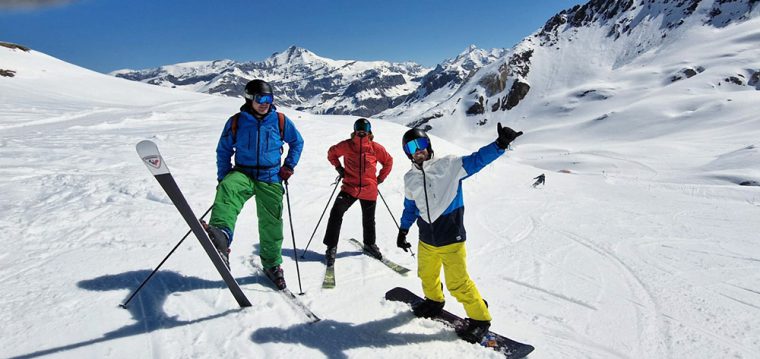
George, Jack and Calvin from SNO skiing the Espace Killy above Val d’Isere and Tignes

Why Val d’Isère Works Brilliantly For Beginners

The Snow Is Ridiculously Reliable

In March 2022 I was in Méribel seeing grass showing through. I drove to mates’ in Val d’Isère and skied perfect corduroy from top to bottom.

The village is really high at 1,850m and the Solaise beginner area goes up to 2,551m. When other resorts are making snow in December, Val d’Isère’s already got a metre of the real stuff. They average 5.5m of snow annually and they’ve got 650 snow cannons for backup. In 20 years of visiting, I’ve never seen the beginner slopes in bad nick.

Those Free Lifts Make A Difference

A full area lift pass in not cheap, but as a beginner in Val d’Isere, you don’t need one. The Village chairlift? Free. The Savonnette drag? Free. You can easily spend two or three days learning the basics without forking out for a lift pass. You might next only want a beginner pass when you’re ready for Solaise. It’s only €40 a day compared to €85+ for the full Espace Killy pass, so you’re laughing.

Solaise: Where The Magic Happens

I cannot overstate how good the Solaise beginner area is. When they rebuilt it in 2016, they installed covered magic carpets. The Pim Pam (it’s actually a double carpet system) and the Poum – ridiculous names, brilliant lifts.

The snow up there is different class to what you get in village-level nursery slopes. The proper Alpine snow is cold, dry and easier to learn on and, on a clear day, you can see Mont Blanc.

Everyone Speaks English (Thank God)

Val d’Isère is French through and through (Chevallot boulangerie croissants make you weep). But finding English instruction is easier than finding après beers. ESF alone has 250+ English-speaking instructors. Then you’ve got the British-run schools like European Snowsport, plus Evolution 2, Oxygène…

I’ve overheard an ESF instructor switching seamlessly between French, English, Italian and Russian in a single lesson. Language is not a barrier here, but call ahead if you want Chinese lessons, like we did for Sky from the SNO tech team.

The Val d’Isere Beginner Areas

Solaise – Your New Best Friend

Solaise is where you want to be. Take the gondola from the village (included in your beginner pass). At the top, turn left into the huge the magic carpet area. The two carpets (Pim Pam is actually a double system) serve different gradients, so you progress naturally. Start on the gentler side and work your way up to the Madeleine green run. This might be when you first become a convert, starting right from the top of the gondola and winding gently all the way back to the village. It’s wide, beautifully groomed, and just steep enough to feel like proper skiing without being scary. I’ve watched so many beginners crack this run and suddenly “get” skiing. Magic moment every time.

Once you’ve nailed Madeleine, the whole mountain opens up. Génépy green is your next target (lovely little cruiser). Then the blues – Edelweiss is perfect for building confidence, and the “M” run… well, that’s where things get interesting.

Village Centre – Where It All Begins

Those free lifts I mentioned are right in the centre of town. The Village chairlift serves Les Lanches nursery slope. It’s a bit of a zoo during French school holidays (avoid February half term or go higher) but it’s ideal for day one.

The Savonnette is a drag lift, which for some is a bit trickier than a chairlift, but it’s free, so why not?

SNO Pro tip: Get to these slopes at 8:30am when they’re freshly groomed and empty. By 11am it’s carnage – ski school groups everywhere.

La Daille – The Budget Option

Down at the bottom of the valley, La Daille is where spend-savvy beginners base themselves. Cheaper accommodation, its own nursery slope with a magic carpet, and honestly? It’s less intimidating than the main village.

The only faff is the bus to Val d’Isère centre. But it’s only 10 minutes, runs every 15, and is free with your lift pass though. I stayed here my first visit and saved enough to fund an extra trip.

Le Fornet – My Secret Weapon

Once you can handle a green run confidently (day 4 or 5), jump on the bus to Le Fornet. This tiny hamlet is about 2km past Val d’Isère. I’ve sent nervous beginners up there because they come back grinning like Cheshire cats. Empty pistes, stunning scenery, and runs that build confidence. Take the cable car up, then the Vallon bubble, to find the most gorgeous, quiet, rolling blue runs in the entire resort.

Choosing The Right Val d’Isere Ski School (Important)

ESF are the Big Beast

400 instructors, like a small army in red jackets. ESF (École du Ski Français) is the trad choice. The teaching style is quite French – technical, structured, focused on getting your technique right from the start. Some find it a bit rigid, but it works. RichT from SNO learned with ESF and his technique is annoyingly good.

Meeting points are impossible to miss, with massive ESF flags at Solaise and in the village. Morning lessons run 9am-12pm, afternoons 2pm-5pm. Book the morning as afternoon snow can be choppy and you’ll be knackered anyway. You’ll pay €72 for 3 hours in a group, but check their website for package deals.

Evolution 2 The Local Cool Kids

With smaller groups (max 8) and younger instructors, Evo 2 is where I send friends who are nervous about skiing. They do a brilliant “Never Ever” course for complete beginners, with no prior knowledge assumed and lots of games.

They’re based right next to the Bellevarde gondola and cost from €85 for half-day groups.

European Snowsport Have The British Touch

Run by Brits, for Brits, they understand the British mentality (ie, nervous but trying not to show it). Brilliant with adults who think they’re too old to learn. I sent my 59-year-old pal to them and he was skiing blues by day six. They do video analysis and seeing yourself ski is… enlightening, but it really helps. They’re based up at La Daille but run courses all over the mountain. Prices from €95 for morning group sessions.

Oxygène Are The Innovators

Oxygène do things differently with smaller groups, focus on fun rather than endless technical drills. They’ve got a “Beginner Pack” that includes equipment and lift pass – if you can’t be arsed organizing everything separately. They’re brilliant with kids their adult groups are top notch, with a speciality in Adaptive skiing. Look for the blue and orange jackets. A 6-day beginner package from €399 all-in.

Hopefully this is a family room in Hotel Ski Lodge, or should we bring a third wheel?

Where To Stay In Val (Avoiding Bankruptcy)

Val d’Isère Centre Is Convenient But Can Be Pricey

If money’s no object, stay in the village centre. You can walk to everything – lifts, ski school, restaurants, that dodgy karaoke bar you’ll end up in on Thursday night (La Taverne, you’ve been warned).

The swanky hotels like Le Tsanteleina and Le Blizzard (not ski-in/ski-out but near enough) are terrific hotels, but there are bargain apartments (ask the SNO team). The Solaise area has loads of decent self-catering options. I particularly rate the apartments near the Spar, where you can nip down for croissants in your slippers. Expect to pay £1,500-2,500 per week for a 2-bed apartment in peak season. January’s cheaper and the best deals are usually packages with flights and transfers included. My pick in Val is always going to be a catered chalet filled with friends or the family.

La Daille Is Where Smart People Beginners Stay

Controversial opinion: La Daille is better for beginners than Val d’Isère centre. Yes, it’s a purpose-built bit from the 1960s but it no longer looks like a communist housing project. It’s got everything you need – nursery slope, supermarket, equipment hire, restaurants – and it’s a third cheaper than the main village.

Those apartment blocks aren’t pretty, but they’re warm, practical, and close to the lifts. We book lots of clients into Les Hauts de la Vanoise and the Residence Soleil. The free shuttle bus runs every 10-15 minutes until midnight, so visting Val d’Isère for dinner is easy. Budget €800-1,200 per week for a 2-bed.

Le Fornet Is A Proper Alpine Experience

If you want the “chocolate box Alpine village” , Le Fornet’s your spot. It’s tiny – maybe 10 buildings total – but utterly charming. Our catered chalets Atamaca and Les Sources are barely 200m from the Fornet cable car. Beginners can take the reliable 2km shuttle to the main nursery slopes in Val and, after a day on the slopes, coming back to peaceful Le Fornet is bliss.

Amateur hour as my boys leave ski lockers open and with shoes discarded in Club Med Val d’Isere

VDI Kit Rental – Don’t Cock This Up

Where To Rent

Whatever you do, don’t buy gear for your first trip – it’s an absolute waste of money. You don’t know what you need yet, and you’ll end up with unsuitable kit gathering dust in your garage (ask me how I know).

Jock and Susan’s team at Snowberry are my go-to. Not the cheapest but probably the best, and trust me, badly fitted boots will ruin your holiday faster than food poisoning. Precision Ski is also solid, or Ski Republic. Book before you go, for discounts and to avoid queuing on Saturday afternoon. Most places let you swap equipment if it’s not right, so don’t stress about getting it perfect first time. €25-50 per day for skis, boots and poles.

What You Actually Need

  • Skis: Shorter than you think, but the shop will get this right if you explain you’re a beginner. Never give a fake weight during ski/boot fitting, because they need to set the release on your bindings so they will come out when you crash (instead of breaking your knees).
  • Boots: Should be quite snug but not hurt. When you stand up the toes should pull away from the front of the boots
  • Poles: The right height is when your elbow makes a 90-degree angle, or thereabouts.
  • Helmet: Not legally required but don’t be daft. Wear one.

Clothing (The Expensive Bit)

Layering is not rocket science but people always balls it up.

Base layer: Thermal top and bottoms. NOT COTTON. I love merino wool but synthetic is fine. Uniqlo do decent cheap ones.

Mid layer: Fleece or puffy jacket. You’ll probably take this off by 11am and I spend most days skiing with it tied around my waist, but some days it’s essential.

Outer layer: Waterproof jacket and salopettes/pants. Doesn’t need to be fancy and Decathlon stuff is fine for beginners.

The other bits:

  • Gloves or mittens (mittens are warmer but you look like a toddler)
  • Ski socks (take two pairs but wear one, not both, or you’ll get blisters)
  • Neck warmer (essential when it’s -15°C)
  • Goggles (I’d recommend amber/orange lenses for all conditions)
  • Sun cream SPF 50 (the sun up here is vicious)
  • Lip balm with SPF (chapped lips really sting at apres ski shots)

First Week Snowplough To… Slightly Better Snowplough

Monday – Welcome To Your New Obsession

First day is always chaos. You’ll spend an hour getting boots on, wonder why you thought this was a good idea, and fall over getting off the lift.

Stick to the free village lifts and focus on standing up, sliding in a straight line, and learning to stop without sitting down. Your thighs will burn and this is normal.

Tuesday – Things Start Clicking

Back to the village slopes for the morning, but something’s changed. You can actually turn! Sort of. By afternoon, you might be ready for Solaise. Take the gondola up (your first real mountain experience – savour it), and hit the Pimpam magic carpet.

Suddenly you’re at 2,500m, surrounded by proper mountains, and you’re skiing. Badly, but still. Magic.

Wednesday – The Breakthrough Day

This is it. The day you attempt your first proper run. The Madeleine beckons. Your instructor will take you to the start, and you’ll think “absolutely not.” But then you’ll start down, remember to breathe, and…

You’re doing it. You’re actually skiing down a mountain. The feeling when you reach the bottom is nothing short of exultation.

Thursday – Confidence Building

Madeleine again in the morning (it’ll feel easier already), then maybe try Génépy in the afternoon. You’re starting to link turns properly now, controlling your speed without defaulting to the emergency snowplough every three seconds.

This is usually when people get cocky and try something too hard. Don’t. Stick to greens and easy blues. Plenty of time for heroics next trip.

Friday – Exploring Time

If you’re feeling confident, today’s the day for Le Fornet. Those rolling blues I mentioned are perfect for building flow and rhythm. Or explore more of Solaise where I would recommend the ‘OK’ run’s Insta-worthy views.

Some novices might be ready for the “M” run by now because it’s a blue, but a friendly one. Wide, not too steep, usually well-groomed. Give it a go if you’re feeling brave.

Saturday – Victory Lap

Last day. You’re a skier now (sort of). Spend it cruising your favourite runs, maybe attempting one last new blue. Download in the gondola with a massive grin and a phone full of photos nobody back home will want to see. You’ll already be planning next year’s holiday. Trust me on this.

Greg from SNO stepping that early snowplough into parallel turns – go Greg!

Mountain Restaurants Above Val d’Isere

On Solaise – The Beginner-Friendly Options

Le Solaise Restaurant Right at the top of the gondola. Massive sun terrace, views to die for, and crucially you can ski straight to it on a green run. The pasta’s decent and (relatively) reasonably priced €15 for spag bol, €8 for a beer. Gets rammed at 12:30 so go early or late.

L’Ouillette Bit fancier, bit pricier, but that truffle pasta at €28 worth every penny. Book ahead (we can ask your hotel to do it) and sit outside if it’s sunny. Access is via the easy bit of the Madeleine green.

Village Level – Easy Access

Café Bellevarde Bottom of the gondola, perfect for meeting non-skiing mates. Does a mean croque monsieur, €12 for lunch, €6 for drinks. Busy but quick turnover.

L’Etincelle Just above the village slopes, with great mountain food like tartiflette.

The Wild Card

La Folie Douce It’s nuts but you have to experience it once. Take the gondola up (don’t try to ski there as a beginner), grab lunch (surprisingly good), and watch the 3pm show. Dancing on tables in ski boots, champagne showers, absolute carnage. Kelly Starlight is the ultimate showman – we once filmed with him for the Beeb.

Download in the gondola before 4pm when it gets messy. You’ve been warned.

What To Do When Not Skiing (Dead Leg Days)

Centre Aquasportif If Your Hotel/Apt Has No Facilities

Swimming pool, wellness area with saunas and steam rooms, climbing wall, gym… Perfect for soothing destroyed muscles.

Go at 5pm when everyone’s at après-ski. €20 for a day pass, €65 for the week. Love the outdoor hot tub while it’s snowing.

Fun Non-Skiing Stuff In Val

Ice skating: Outdoor rink in the village is €8 including skate hire.

Snowshoeing: Beautiful marked trails from Le Fornet. Rent shoes from a sports shop, about €15/day.

Husky sledding: The dogs are bonkers but friendly. €120 for 30 minutes, book through the tourist office.

Paragliding: Tandem flights from €150 for insane views but I’m too scared.

VDI Après-Ski That Won’t Kill You

Start gentle. Beginners + too much altitude + alcohol = disaster.

Café Face: Right in the village, easy stumble home from good pizzas and cocktails.

L’Atelier: Bit classier and cocktails are pricier from €15+.

Cocorico: Gets lively but not always La-Folie-mental. Live music some nights. Try the mutzig beer.

Dick’s Tea Bar: It’s an institution, since 1979 and gets loose after 10pm.

Saving Money (Because Val d’Isère Ain’t Cheap)

There’s no point sugar-coating it – Val d’Isère can be expensive. But there are lots of ways to ski and stay here on a modest budget:

  1. Book everything online in advance – Equipment and ski school can save 10-20% earlybird.
  2. Use those free lifts – No need for a lift pass your first couple of days.
  3. Beginner lift pass – €40 vs €85+ for full area after day 2 or 3.
  4. Lunch in the village – €15 vs €30 on the mountain. Ski down or download in the gondola.
  5. Happy hours – Most bars do them 4-6pm when pints are €5 instead of €8.
  6. Supermarket dinner one night – The Spar does decent ready meals vs eating out every night will bankrupt you.
  7. January or late March – Avoid school holidays if possible. A third cheaper and half the people.
SNO expert RichT gives Greg a lesson… nooo! Get proper lessons – don’t be like Greg!

Common Novice Cock-Ups To Avoid

  • Skiing without lessons – “I’m sporty, I’ll figure it out.” Nope. You’ll hurt yourself or someone else.
  • Wearing jeans – They get wet then freeze and you’ll be miserable.
  • Going too hard too early – Your legs aren’t ready for 6 hours of skiing on day one. Build up slowly.
  • Liquid lunch – One beer is fine, but three pints and a génépy?..
  • Not downloading – Tired beginners + busy slopes at 3pm = accidents. Take the lift down.
  • Ignoring altitude – You’re at 2,000m+ so drink water constantly to avoid the headache from hell.
  • Being too proud – Everyone starts somewhere. That 5-year-old flying past you? She’s been skiing since she could walk. You haven’t. Relax.

Getting Here

We organise everything in one package for you, but we also book accom-only when clients have arranged independent travel, so here’s a few notes on getting there yourself.

From Geneva (most common) is a 3-hour transfer but flights are usually cheapest. Shared transfers with the likes of Ben’s Bus, Alpybus, etc. run from about €75 each way. Private transfers from €400 per vehicle. Split between 4 isn’t too bad. Hire cars are useful for exploring but parking in resort can be €50/day for underground parking.

From Lyon it’s 3.5 hours with the same transfer options.

From Chambéry is a shorter 2 hours but limited flights. Good for weekends.

By Train (eco favourite) Eurostar to Paris, TGV to Bourg-Saint-Maurice, bus to resort. Takes all day but you can drink wine and watch the mountains get closer.

Seriously though, it’s so much less faff and stress to book a package ski holiday rather than DIY. Just call or drop us a line and we’ll give you some options, or browse package deals.

When To Come To VDI

December – Pre-Christmas is quiet and they’ve got enough cannons to cope ensure early snow. Christmas is magical and New Year week is so fun.

January – Quiet slopes, cold yet sunny days, everything’s cheaper. Avoid French Zone B holidays (check online, it changes yearly but ends 4th Jan in 2026).

February – Peak season and guaranteed snow. Half-term week is absolute bedlam but really buzzy atmosphere – expect occasional queues for a lift.

March – Warmer longer days and good prices and gorgeous weather. Easter is a cheaper alternative to February half-term but with less perfect snow.

April – End of season vibe is brilliant with barbecues, spring skiing conditions, deals galore. Snow up high is still good but don’t expect perfect corduroy at village level.

How’s that for the perfect Val d’Isere ski conditions for beginners? Sunshine and fresh powder!

The Safety Lecture (Sorry, But Important)

Ski Insurance Is Not Optional

Your EHIC/GHIC covers basic medical but NOT mountain rescue. A helicopter off the mountain costs €3,000+ so get proper winter sports insurance.

On-Mountain Safety

  • Helmets aren’t legally required but wear one anyway.
  • Stay on marked pistes – off-piste is not a good idea for beginners.
  • Normally I’d say check the avalanche risk daily (flags at lift stations) but it’s not an issue on debutante slopes. If the piste says closed, just don’t go down it.
  • Emergency number is 112 (works on any network) and piste patrol number is +33 4 79 06 02 10

Common Sense Stuff

  • Altitude makes you dehydrated, so you need to drink water constantly.
  • Apply more sun cream every 2-3 hours minimum as it’s really easy to burn with both sun and reflected light off the snow.
  • If visibility’s bad anought that you can’t see the trail markers, go and relax in a mountain restaurant or head down via a lift.

Why Val d’Isère Will Ruin You For Other Resorts

Here’s the thing nobody tells you about learning in Val d’Isère – everywhere else can feel a bit ‘meh’ afterwards.

You’ll go to other resorts and wonder why the snow’s not as good. Why the mountain restaurants are bang average. Why you can’t ski from 2,500m as a beginner. Why the instructors are not as hot (that one’s from my wife). You’ve been spoiled, basically. But that’s fine because you learned to ski in one of the world’s truly great ski resorts. You learned at altitude, on proper snow, with Mont Blanc as your backdrop.

My first ever ski run was a dry slope in England and school ski trip to hostel, in a two-drag town. I still loved it, but imagine starting here instead? Cruising down Madeleine from Solaise with the whole Alps spread out before you.

That’s why I bring beginners to Val d’Isere. Sure it’s more expensive than Bansko or Andorra but, get your first taste of proper mountains, proper snow, proper skiing? You’re hooked for life.

How To Book Your Learn-To-Ski Trip To Val d’Isere

If you’ve made it this far, you’re clearly serious about learning to ski. And if you’re going to do it, do it properly, Val d’Isère’s waiting for you.

Call our team of friendly experts – it’s our job to ensure you find the perfect Val d’Isere ski holiday – 020 7770 6888.
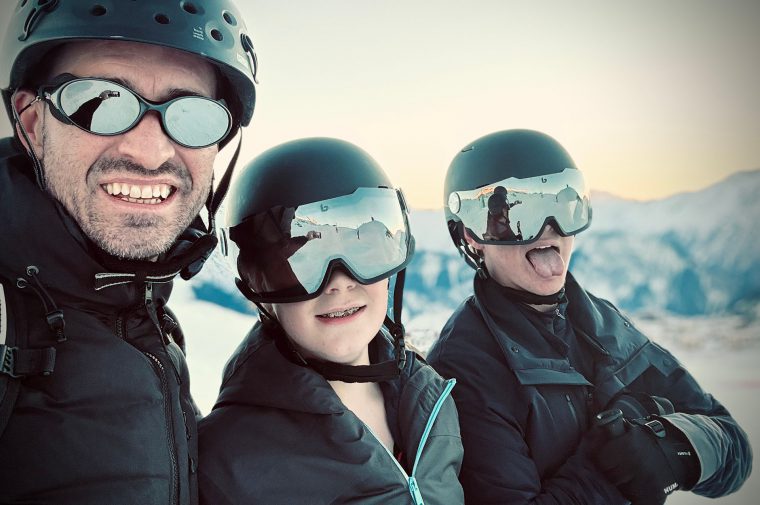
When you’re standing at the top of Madeleine, looking down at what seems like an impossibly long run, remember – thousands of beginners have done this before you. You’ve got this.

See you in the Cocorico for après. First round’s on you.

Learn more about Val d’Isere ski holidays, call us for help choosing or browse package deals.

Ultimate Advanced & Expert Skiers Guide to Tignes

Why Tignes is an Expert’s Playground

Tignes is a place to test yourself in big mountains. With 29 black runs across the Espace Killy (including one of Europe’s longest) and couloirs where heart rate matches altitude, Tignes demands respect but delivers reward in equal measure.

La Sache drops 1,200m over 10 glorious kilometres, Les Tufs couloirs hit gradients up to 53 degrees, and the glacier tops out at 3,456m. But Tignes is more than stats. At the top of Mickey’s Ears after a 30-minute walk in, look down a 48-degree couloir and you’ll know what I mean.

Backcountry in Tignes is proper Alpine wilderness

I think ‘accessibility’ sets Tignes apart, because you don’t need dawn starts and multi-hour approaches. It’s so fun to ski epic descents using the lift system. The Naturide runs are basically controlled but ungroomed blacks, easing you into off-piste.

Rich-T from SNO sums it up, “I was a good skier when I came to Tignes, but I’m getting better here.”

World-class mountain guides who know every hidden couloir, and a local scene where Guerlain Chicherit (four-time freeride world champion) is just another guy in the lift queue. You’ve found expert skiing nirvana.

The Black Runs That Define Tignes

Groomed Blacks – Where Legends Are Made

La Sache is a rite of passage starting at the Eye of the Needle at Aiguille Percée. This 10km monster descends through a remote valley to Les Brévières. Down 1,200m vertical you’ll encounter everything. Steep pitches test your edge control, mogul fields that destroy your thighs, and a schuss where 100kph isn’t unusual. Hit it first thing after groomers and you’ll understand why locals call it “meditation with consequences.”

Trolles, now renamed Johan Clarey after Tignes’ Olympic hero, drops 482m in 1.4km from Tovière. Johan clocked 141kph on the last stretch past the frozen lake.

Pramecou combines steepness and moguls. From Col des Vès, it’s “groomed” in the loosest sense. Running a piste basher over it just makes the moguls angry. On firm snow, it’s a technique exam. In soft conditions, it’s almost fun. Almost.

Silène offers a different challenge – remoteness. This black snake winds down a valley most skiers never see, far from lifts and crowds. Not the steepest black, but isolated. Bail out options limited, mobile phone signal non-existent. Have an equipment failure, it’s a long, lonely walk.

Naturide Runs – Controlled Chaos

Guerlain Chicherit is Tignes’ most challenging marked run – named after the local legend who redefined what’s possible on skis. The ‘Naturide’ off Col des Vès is never groomed and the moguls can get quite big.

Paquerettes is technically a black run, but skis more like a marked off-piste route.

Golf is sort of in-between on and off piste. From Merles you can follow the marked route or explore the powder bowls either side.

Campanules and Épilobe each offer technical skiing but Épilobe (off Chaudannes) only opens when conditions allow.

Val d’Isère Blacks are Worth the Journey

La Face was the 1992 Olympic downhill where Ortlieb took gold in 1:50.37. You won’t match that time, but line gives perspective on what “fast” really means.

Épaule du Charvet only opens in good conditions. Locals gather at the bottom to watch the carnage 😉

OK/World Cup run is an FIS course. Often groomed to race standards when possible – faster and icier than anything else in Tignes. Tuck the top section if you dare.

Tignes’ Off-Piste & Couloirs

Classic Off-Piste Runs

Vallon de la Sache represents everything magnificent about Tignes off-piste. It’s 3-minutes hike from Aiguille Percée’s summit. The classic line follows the valley floor, but I’ve seen locals in the three couloirs. From the ridge, they range from 35 degrees to 50+.

You can stay high and traverse out, or drop into the gorge at the bottom. Watch for the 30-meter frozen waterfall. I think it’s hard left traverse (but ask a guide) to avoid ice climbing.

Mickey’s Ears are famous but a half hour walk. From Tovière’s summit, you follow the ridge until you spot the twin rock formation. The couloir itself is a 48-degree sustained pitch that demands confidence/technique/commitment. No easing-in to this one.

Tour de Pramecou has multiple variants below Grande Motte glacier, each with different characters. Love the glacier backdrop – you’re properly out there, despite being just minutes from the lift system.

Les Tufs couloirs are Tignes’ answer to La Grave. Nine distinct lines dropping between Le Lac and Val Claret, ranging from 45 to 53 degrees. Approach down either Tovière or Paquis, but don’t let that fool you. Side-slipping the entrance won’t work here – you need to turn from the top.

Chardonnet Couloir drops 500m from Grattalu chair. Easy access with genuine challenge. Hike from the lift 20 minutes to a rocky outcrop and the couloir entrance. Pick the classic line (easier but busier) or the direct (steeper and often icy). Both end at Grand Huit chair, for easy laps.

Tignes’ More Technical Descents

La Petite Balme under the Grande Motte is forgiving enough to push your limits. The high-altitude snow stays good, but there are ‘sharks’ (barely covered rocks) in early and late season.

Vallée Perdue or the Lost Valley is a 10 minute ridge walk from the Combe Folle drag. Don’t miss the exit, or you’ve a taxi ride home from the next valley.

Les Boisses Couloirs are avalanche magnets where local knowledge is important.

Spatule on Bellevarde’s north face has the Olympic downhill start. Powder can linger days after a storm.

The view beyond the piste, skiing out of bounds in Tignes

Tignes Extreme Terrain (Local Guide Essential)

Dome de la Sache approach alone is a 25-minute skin or bootpack from the valley floor. With exposed pitches above serious cliffs, route finding is critical. The classic line threads between cliff bands before opening into perfect powder fields.

Grande Balme to Aiguille Noire traverses into serious alpinism territory. With seracs, crevasses, and exposure, I recommend only attempting with qualified guides.

Lac du Chevril is nice in late-season, when the reservoir drops enough to expose the old bridge. Ski from the mid-Sache valley to the lake shore, then 20-minute walk across the dam, where you need a taxi or friend to drive back.

A Sector-by-Sector Guide for Expert Skiers

Grande Motte Glacier

At 3,456m, the glacier is best for consistent snow. The funicular and cable car combo gets you from Val Claret to the summit in minutes. Wind is the enemy here – when it’s blowing up top, it’s properly violent.

On the right day this is paradise. The Tour de Charvet drops north from the glacier, offering 1,000m of varied terrain ending at the Lac du Chevril.

SNO Pro tip: The first funicular is at 9am but the cable car doesn’t start until 9:15. We like to go inside to keep warm and get a hot-choc.

Aiguille Percée/Sache Valley

From Aiguille Percée’s summit at 2,750m, you can ski to Les Brévières at 1,550m by several routes.

The Sache valley offers classic off-piste with easy escapes. Push further into the side valleys and route finding becomes crucial. The nature reserve designation means you’re skiing through protected wilderness – ibex sightings, and the sense of remoteness is genuine.

The valley creates its own microclimate, sometimes holding good snow when other aspects are crusty. Conversely, wind can funnel through, creating huge accumulations and avalanche hazard.

Tovière Sector

Mickey’s Ears gets the glory, but dozens of other lines drop from this sector, many unnamed and unmarked on the map.

The Lavachet Wall below Tovière is visible from the village and it’s all easily lapped with the gondola.

Les Tufs couloirs have nine different lines. Central couloirs are “easiest” at around 45 degrees. The outer lines steepen to 50+, with the far skier’s left option touching 53 degrees. On a powder day they get busy but the quick access (10 minutes from lift to drop-in) means you can lap them repeatedly on different lines.

Col du Palet – The Quiet Challenge

Col du Palet offers equally challenging terrain with half the crowds. The Guerlain Chicherit run real gems lie off the sides of the marked runs. I like the bowls and gullies between La Grande Balme and Carline.

Avalanche Safety

Gear You Will Need

You must be confident in usig your transceiver, probe, and shovel. An ABS rucksack can’t guarantee you survive an avalanche, but I believe they do give you a fighting chance.

Getting More Educated

Henry’s avalanche talks are usually every week in the ski season. These aren’t basic “snow is dangerous” lectures – Henry dives deep into snow science, local conditions, and decision-making. I’ve been skiing for 40 years and learn something new each time.

Top Ski runs avalanche training on Monday evenings at 5:30pm where they teach transceiver searches, probe techniques and snow assessment.

I would recommend the ANENA course (Association Nationale pour l’Étude de la Neige et des Avalanches). They’re not cheap, but neither is a helicopter evacuation.

Learn To Do Risk Assessments

Checking the daily bulletin is important and in Tignes, pay attention to wind effect. The high altitude and exposed terrain mean wind transport is constant.

Guide Services and Expert Ski Lessons in Tignes

Recommended Mountain Guide Companies

The Bureau des Guides de Tignes represents the official guide collective, and there are lots of independent IFMGA guides in Tignes too. The bureau has a wide range of services starting with one-day off-piste guiding and prices start at €400 per day for a group of 6.

The guides at Snocool specialise in off-piste and steep skiing. Their couloir workshops teach how to assess and safely approach more extreme terrain.

Expert Progression Programs

Steep skiing clinics run throughout the season. The jump turn workshops teach how to ski over 50 degree slopes, where normal turns aren’t possible.

The touring intro courses can help you go from lift-served off-piste to true backcountry skiing. Learning efficient skinning technique and transition skills opens up terrain the lifts can’t reach.

Ice climbing combination courses reflect Tignes’ winter climbing opportunities. The frozen waterfalls around Les Brévières offer world-class ice climbing. Combining this with skiing creates the ultimate alpine experience – skin up, climb a frozen waterfall, then ski down (with a guide only!).

Notable Local Guides

I recommend Evo 2 but the biggest cadre of mountain guides in Tignes can be booked through Bureau de Guides de Tignes. The groups are more social and economical, but you’re limited by the weakest member. Private guiding lets you tailor the day exactly to your abilities and conditions. For pushing personal limits, private is worth the investment.

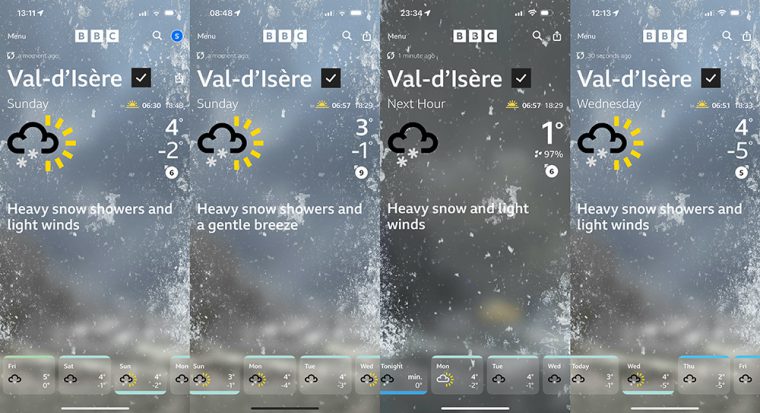
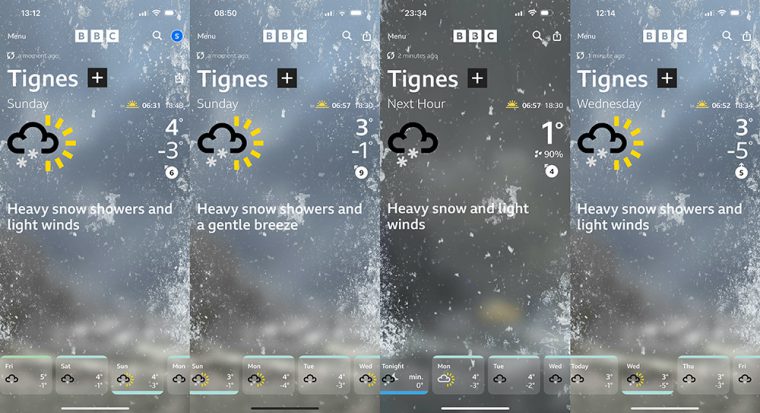
A whole week of this kind of snow forecast is common in Tignes!

Snow Conditions & When to Visit Tignes

Seasonal Considerations

November and December in Tignes means glacier focus. Lower elevations need more base before the off-piste opens properly. But the glacier? It’s already in mid-season form. This is when locals lap the Tour de Charvet and other glacier routes while tourists wonder why the lower slopes are so firm.

January through February brings the deepest snowpacks and most stable conditions for steep skiing. Yes, it’s cold – properly cold. Minus 20°C at the glacier isn’t unusual. But cold snow is stable snow, and stability matters when you’re dropping into 50-degree couloirs.

March introduces the corn cycle when you should time your skiing carefully. Again, take advice from local guides.

In April and May most tourists have gone, but spring skiing is so great for experts. The snowpack is quite stable and sometimes you can get to skiing that’s too dangerous mid-winter. The Haute Route is more famous, but local tours linking Tignes with neighbouring valleys are equally stunning and have less crowds.

Where Should You Go at Different Times of Day?

North faces in mid-winter stay cold all day. Hit them anytime after avalanche control and before 3pm when flat light often moves in. These are your banker slopes – consistently good when other aspects are variable.

East faces catch first sun, going through the melt-freeze cycle earliest. In spring you can find morning corn there first but in winter they get sun crusts by noon.

South faces in winter might only soften for a two-hour window. But in spring they might be great from 11am-2pm before it’s dangerously warm. Watch them carefully – when you see the first naturally triggered wet slides, it’s time to move to northern aspects.

West faces offer afternoon perfection. While everyone’s heading home, these slopes are just coming into condition (at 4pm when the lifts are empty).

Equipment for Expert Terrain

What’s the Best Ski Selection?

If you’re still on 88mm all-mountain skis, you’re handicapping yourself. Modern powder skis in the 100-115mm range have revolutionized off-piste skiing. Yes, they’re less precise on firm snow, but when 80% of your skiing is off-piste, optimize for that.

Stiffness matters more than width. Soft skis fold in variable conditions and chatter at speed. You want a platform that remains stable when you’re straightlining through chunder or landing off wind lips.

Technical Gear You Might Consider

Crampons can make a sketchy bootpack into a slightly safer hike. Aluminum models work fine for most approaches, but if you’re regularly on firm snow or ice, steel crampons bite better. Make sure they fit your boots properly – finding out they don’t at the base of a couloir is sub-optimal.

Ice axes for ski mountaineering don’t need to be technical tools. I would take a simple, lightweight axe for exposed traverses and practice a self-arrest. Rope-work basics should be in every expert skier’s toolkit.

Physical & Mental Prep for Skiing Tignes

Physical Fitness Needed

Let’s be honest, expert skiing at altitude is physically hard, when a hike that’s easy at sea level becomes a sufferfest at 3,000m. There’s no point me telling you how to get fit before you go, but I will say its important that you do.

Mental Preparation and Toughness

I don’t do it but ‘visualization’ gets talked about a lot. i.e. seeing yourself making each turn, feel the snow etc, to anticipate the challenges. When you actually drop in, you’re executing a plan, not reacting to surprises.

Every decision – every single turn – involves risk assessment. Is that wind lip stable… can I stop before that drop… etc?

You should establish who makes route decisions? How do you communicate in terrain where voice doesn’t carry? What are your bail-out signals?

Technical Skills Needed in Tignes

Some of the tech skills are a bit obvious – e.g. jump-turns in 50-degree terrain are essential. Slough-management separates good steep skiers from hospital patients.

Recovery & Cross-Training During Your Holiday

Physical Recovery

Your body takes a beating skiing at this level. Professional massage isn’t indulgence – it’s maintenance. The sports massage therapists in Tignes understand skiing-specific issues.

There aren’t any Ice baths that I know of, but the Lagon sports centre has a cold plunge pool.

Skiers’ Yoga addresses everything that skiing pounds – hip flexors, IT bands, lower back. The mindfulness aspect helps with the mental side too. Several Tignes hotels offer ski-specific yoga sessions. Ask the SNO team and we can book your Tignes holiday in accommodation with yoga or masseur.

The Best Ski Holidays for Experts Visiting Tignes

Tignes Chalets, Hotels and Apartments nearest the Slopes

The team at SNO love this place and we have the biggest selection of Tignes accommodation, so call us for advice on 020 7770 6888 or read more about vacations skiing in Tignes.

Best Tignes Après-Ski Bars & Nightlife

One of the Alps’ most extensive nightlife scenes, spread across Tignes’ five connected villages. Legendary après ski at Cocorico. Late-night clubbing in Melting Pot. Bonkers at La Folie Douce. Chill at Le Studio, before a toney finish in Caves du Loop. Free shuttle connects everything.

SNOman at La Follie Douce après-ski, before a wobbly slide home to Club Med Tignes

Why Tignes Stands Out

The SNO team has been out-on-the-tiles in every top ski resort across the Alps, but Tignes stands out for its sheer variety. Val d’Isère concentrates nightlife in the central area. Courchevel is sophisticated but limited late-night. Tignes spreads the action across five distinct villages, each with its own character and must-visit bars.

With the free bus between villages until the early hours makes your après odyssey easy. I’ve started with après-ski in Val Claret, done dinner then Scotty’s (now Queue de Cochon) in Le Lavachet, then finished at Blue Girl in Val Claret. All without worrying about transport costs or logistics.

What you’ll find:

  • Venues across 5 villages with different atmospheres
  • Free shuttle buses connecting everything
  • Options from budget-friendly local bars to upscale cocktail venues
  • Late-night clubs staying open until the early hours
  • Mix of British pub culture, French Alpine tradition, modern party venues

The Five Villages Explained

Val Claret: The Après Ski Hub

Altitude: 2,100m | High-energy atmosphere

Val Claret sits at the base of the glacier for that authentic “straight off the slopes” vibe. The main venues have perfected the art of après-ski – the scene can get pretty intense during peak times.

Cocorico Après-Ski Bar

The venue everyone talks about, for better or wor se. Cocorico has built its reputation on controlled chaos. Table dancing, singalongs, and the kind of scenes that end up on Instagram stories. The large terrace fills fast during après-ski hours.

When to visit: The energy builds from 3pm, peaks between 4-6pm, then gradually transitions to a more relaxed evening. Happy hour runs from 2-4pm if you want slightly cheaper drinks and a less frantic scene.

What to expect: A young, international crowd. Lots of British groups and music that veers toward crowd-pleasers rather than cutting-edge. The atmosphere that can feel overwhelming if you’re not in the mood for high energy. We love it!

The table dancing tradition has become somewhat legendary. Don’t heed naysayers that music selection isn’t what it used to be. It’s undeniably an experience, and the terrace views of the glacier are spectacular when you pause between the mayhem.

Le Whitney Bar

If Cocorico feels too much, Whitney is a sophisticated alternative. The cocktail menu is decent, the terrace has better views for photos. The crowd leans slightly older, with more conversation than crowd participation.

Best for: Groups who want quality drinks, couples looking for something more intimate, anyone seeking refuge from the party atmosphere without leaving Val Claret entirely.

The Underground Scene

Both Blue Girl and Melting Pot occupy basements that transform at night. Blue Girl tends toward mainstream dance music and attracts a younger crowd. Melting Pot caters more to seasonaires and people who know their EDM.

Jack from SNO summed it up, “Blue Girl is where you go for a city nightclub. Melting Pot is where you go when you want to dance.”

RichT and George fresh off the slopes at Cocorico

Tignes Le Lac: The Balanced Option

Altitude: 2,100m | Something for everyone

Le Lac feels like a proper village center, with venues clustered around the main area. The bar-hopping here feels natural and adds variety to your evening.

The Loop Bar

Loop has somehow become the unofficial community centre of Tignes. On any given evening, you’ll find ski instructors, seasonaires, families finishing dinner, and hardcore après-skiers all happily cheek-by-jowl.

What works: The loyalty card, decent food including that Korean chicken burger mentioned in every review, sports on multiple screens, and happy hour that runs longer than most.

The crowd is genuinely mixed – French locals, British workers, international guests. A more authentic atmosphere than venues that cater exclusively to tourists.

Strike Tignes

Large  new venue has has raised the bar for nightlife in Le Lac. Multiple areas, pro sound and lighting, plus capacity for big numbers.

Mixes of international DJs and local talent – production values are genuinely high. Entry fees vary depending on what’s happening, but expect to pay club rather than pub prices.

Worth knowing: Opens Wednesday through Saturday from 11pm, with the real action starting after 1am. Dress code is enforced after 10pm – no ski wear.

The Marmot Arms

One of the better British pubs you’ll find in the Alps. Proper ales, Brit staff who understand pub culture, and opening hours that work for après-ski.

The pub quiz on Wednesday nights draws a surprisingly competitive crowd. The atmosphere during major football matches rivals anything you’d find in the UK. Sunday roasts are the real deal – proper Yorkshire puddings get SNOman’s vote.

SNOman and friends party with local legend band ‘Mullet’ at Loop bar

Le Lavachet: The Quieter Choice

Altitude: 1,550m | More intimate atmosphere

Most tourists skip Lavachet, which is exactly why it’s worth visiting. Venues cater to chalet guests and locals looking for something away from the tourist crowds.

Le Brasero

Notable for live music rather than relying on DJs and playlists. They book musicians throughout the season. The space is small enough that performances feel intimate rather than like background noise.

Local French performers, touring acts, acoustic sessions – there’s something happening most nights. Check their schedule if you prefer live music to recorded.

So Bar

Opens later than most venues (8pm) – cocktails and wine, rather than beer and shots. Clientele skews toward chalet guests and resort staff looking for quality over quantity.

Expect higher prices but genuine mixology, vodka-Red Bull combo’s. The conversation-focused atmosphere extends past midnight.

Les Brévières: Traditionally Alpine

Altitude: 1,550m | Local character

Les Brévières maintains its Alpine village character, and the watering holes reflect this. Prices are lower, the atmosphere more relaxed, and you’re more likely to sup alongside French locals.

The Vault

This venue has gone through several iterations but maintains the quirky character. The building has genuine historical character rather than manufactured Alpine theming.

Local appeal: Real regulars mixing with tourists. Conversational atmosphere rather than party focused. Traditional Savoyard food alongside drinks.

Hotel Bars

Particularly handy during bad weather when outdoor terraces close. Intimate settings that encourage conversation.

Les Boisses: The Family Base

Altitude: 1,850m | Quiet and family-oriented

Les Boisses serves mainly as accommodation rather than nightlife destination. Hotel bars work well as starting points, with easy shuttle access to the main venues.

Les Melezes

Our fave’ for both apres ski and a later night out in Les Boisses, largely because of uber-host Ellie.

Le Four 7

Chilled bar and games-room above eatery with mountain fare and Japanese.

Cav’Ô 1800

Nice cocktails and opens until 2am.

Beware going too large at the Follie – you have to ski home!

The SNO Après-Ski Strategy

We’ve tested various combo’s over many seasons – this one’s ambitious, but works:

Early afternoon (2-4pm): Start at Cocorico during happy hour. The crowd is manageable, drinks are cheaper, and you can secure terrace space before the chaos commences. Order food now as you’ll need it later.

Peak time (4-6pm): Stay at Cocorico for the ‘full experience’ or escape to Loop Bar if the energy is OTT. The 5:30pm shuttle to Le Lac provides an easy exit-excuse.

Evening (6-8pm): Move to Le Lac for dinner and regrouping. Time to sober up (slightly) and plan the rest of the evening. Loop Bar for casual dining, Whitney Bar for more upscale.

Big Night Out (8pm onwards): Choose your adventure based on group preferences. Pub-hopping around Le Lac, underground scenes in Val Claret, or full nightclub experience at Strike Tignes.

The beauty of Tignes is that you’re never stuck in one scene. Change venues based on energy levels and group dynamics.

Seasonal Events Worth Booking Around

European Snow Pride (March): Europe’s largest gay ski week. Over 1,000 participants transform the entire resort. The atmos’ is infectious and straight folks are equally welcomed. Venues put on special events.

Mountain Shaker Festival (Feb): Electronic music festival in multiple venues simultaneously. A village-wide party atmosphere with programming spread across different locations.

Tignes Unlimited (Late April/Early May): Season-closing festival that brings international DJs while glacier skiing continues. The combination of spring skiing and festival feel is intoxicating. One of the best times to go on holiday to Tignes.

These events fill accommodation quickly. Book early if you want to experience the resort during peak party periods.

Need-to-Know Practical Info

Transport: Bus runs every 15 minutes during peak times, then hourly until 5 a.m. Download the Tignes shuttle app for real-time tracking. Walking between Val Claret and Le Lac takes about 15 minutes via the main road. Dress right for this – it gets really cold at night.

Money-saving tips:

  • Loop Bar’s loyalty card (10 drinks = 1 free) works on cocktails too
  • Happy hours vary by venue but generally run 3-7pm
  • Les Brévières venues offer the cheapest drinks in resort
  • Pre-drinking in apartments is common and accepted

Group bookings: Whitney Bar and Strike Tignes take reservations for larger groups. Cocorico and Loop Bar operate on a first-come basis.

Recent changes: Strike Tignes has raised the nightlife stakes since opening. Some smaller venues have adjusted opening hours due to staffing issues. Pricing has increased across the board post-COVID, but proportionally with other resorts.

SNO’s Honest Assessment

Tignes nightlife works because the venues have genuine character developed over time. The five-village structure creates natural variety that smaller resorts can’t match.

Is it the absolute best in the Alps? That depends what you’re looking for. Val d’Isère has more luxury options. St. Anton has deeper après-ski traditions. But for sheer variety and accessibility, Tignes is hard to beat.

Free transport changes the game, compared to resorts where you’re trapped in one area all evening. With venues connected this easily, nightlife becomes about exploration.

The democratic nature of the social scene is its strength. Memorable evenings on limited seasonaires budget, or dropping big bucks on VIP après. The Tignes Spirit is great at any price point.

We love après ski and night life in Tignes, and we know you will too.

NB: Prices and opening hours vary by season. This guide reflects conditions during recent visits but venues do adjust operations based on snow conditions, staff availability, and seasonal demand.

Talk to the SNO team on 020 7770 6888 about where’s best to stay to be plugged into the Tignes social scene. Read more about ski trips to Tignes or browse the ski holidays.

The Ultimate Intermediate Skier’s Guide to Tignes

Why is Tignes a Paradise for Intermediate Skiers?

If you’ve ditched the snowplough and can link turns without wanting to cry congrats! You’re in that sweet spot, where Tignes totally comes alive! 55 runs perfectly pitched for intermediates (38 blues and 17 reds). Tignes is where decent skiers become properly good.

SNOman and Calvin in Tignes

The stats show more than you’ll ski in a single holiday – 300km of terrain across the Espace Killy. Altitudes from 1,550m to 3,456m. Proper snow from November to May. Variety to ski different runs for three weeks straight. What actually matters is the thoughtful design that makes Tignes special for intermediates. Wide boulevards build confidence and properly challenging reds develop skill. Even the lift connections make sense – no traversing half the mountain to link favourite runs. Tignes is one of the best intermediate ski resorts in France and the world.

I’ve watched countless intermediates transform here and been one myself. The high altitude is Instagram-worthy but also gives consistent conditions day after day. No slush to fight after 2pm or death-ice at 9am. Greg from SNO arrived on his second visit, a cautious blue-run skier. He left carving reds and trying easy blacks, with intent rather than terror.

The intermediate magic is in sectors like Col du Palet and Aiguille Percée. When beginners cluster around the village nursery slopes and experts disappear into the highest couloirs, these areas in-between are intermediate nirvana. Interesting enough to keep you engaged, not so scary you need new salopettes.

World-class ski schools specialised in taking intermediates. Year-round glacier skiing guarantees great conditions. You’ve found the promised land.

The Best Tignes Blue Runs Build Confidence

Must-Ski Blues for Progression

Grattalu is the run that explains why Tignes works brilliantly for intermediates. This wide boulevard from the Grattalu chairlift is criminally overlooked. The result is a beautifully groomed, oft-empty piste with slow-skiing zone and views straight up Grande Motte. Wide enough to practice proper carving without worrying about some speed demon taking you out. Greg spent three mornings on his carving and claimed it was the “best skiing of my life.”

Genepy is a gentle, winding cruise from the top of the Grande Motte glacier. At 3,400m the gradient is mellow but bloody hell, the setting! 2pm when the morning crowds have buggered off for lunch, you’ll often have it to yourself.

Perce Neige via the Grand Huit is your intermediate exam paper. Steeps to test your bottle, flatter sections to keep speed up, and terrain changing from groomed motorway to choppy mess late afternoon. Nail this and you’re ready for reds.

Combe from Palafour is Rich-T from SNO’s favourite warm-up. The terrain rolls like a gentle roller coaster – compress in the dips, extend over the crests. “On those crisp mornings when you’re first on the lift, this run makes you remember why you fell in love with skiing. Improvers feel how much skiing is fun, not something to survive.”

Cyclamen is your tourist run with benefits. From Aiguille Percée, you ski past that famous Eye of the Needle rock formation. Yes, that one from James Bond. The run has consistent pitch, good width – work on technique while gawping at the view. Just don’t ski into someone while Instagram-ing.

Blues with a View

Lac takes you on a scenic tour around Tignes’ frozen lake. More journey than challenge, but that’s the point. Use it to practice perfect form at comfortable speeds, while enjoying 360-degree mountain views.

The Loop (Palafour to Val Claret via Merles) isn’t one run but a circuit. Different snow conditions, and gradients while covering serious distance. Pack a sarnie – you’ll want to make a morning of it.

Rhododendron-Mélèzes-Myrtilles is a holy grail of intermediate descents. 8km Aiguille Rouge to Les Brévières is marked blue but, at 1,200m vertical, it demands stamina and focus. Start early, take breaks, and embrace the burning thighs. Your sense of achievement at the bottom is immense.

Val d’Isère Blues Worth the Journey

Don’t ignore the Val d’Isère side of the Espace Killy. Pâquerettes, via the Daille gondola, is 3km of consistent gradient that’s perfect for rhythm skiing. Unlike Tignes’ varied terrain, this maintains the same pitch throughout – ideal for drilling technique.

Club des Sports off the Grand Pré chair provides rolling terrain that feels like a groomed ski cross course. Natural features enable small jumps and terrain variations without the commitment of a park.

Red Runs That Define Tignes

Classic Reds for Skill Building

Double M is Tignes’ signature intermediate red run and actually does deserve the hype. Fast sweeping turns down from Grande Motte – a fall line that never gets properly scary but keeps you honest. On a clear morning with fresh grooming, this is as good as intermediate skiing gets. Problem is, everyone knows it. Hit this at 11am on a Saturday and you’ll spend more time dodging bodies than carving. Get here first thing, or after 3pm.

Orange from the Marmottes chair at 2,700m. Drop into a steep, wide section before it mellows into gorgeous tree-lined cruising. Halfway down sits the infamous La Folie Douce – perhaps the world’s most famous après ski joint. Stop for one Aperol Spritz, fine. Stop for three and that lower section gets… interesting. Don’t ask me how I know.

Combe Folle separates the wheat from the chaff. The gradient is proper steep for a red, and when it’s icy (Jan mornings), it’s a right bastard. Nail this when it’s firm and everything else feels easy.

Glacier from the Grande Motte summit isn’t technically difficult but OMG the setting! Starting at 3,655m with views into Italy and Switzerland (UK on a clear day?). Try not to crash amid pitch changes and gawping at the scenery. Book ahead for lunch at Le Panoramic – every intermediate and their mum has the same idea.

Technical Reds for Progression

Le Mur is where you meet moguls properly. Not those pathetic little bumps on the side of blues – proper, knee-high, thigh-burners. Technique training disguised as torture. Take it slow, focus on absorption. I’m not too proud to bail out to the smooth bit, when legs turn to jelly.

Actually, scratch that advice about Le Mur being essential. If you hate moguls (doesn’t everyone?) there’s plenty else to work on. But, if you want to improve, a morning here pays dividends.

Ancolie bridges the gap between spicy blues and real reds. An alternative finish to blue runs, and to gauge your progression. When Ancolie feels easy, you’re ready for bigger challenges.

Leisse on the glacier deserves multiple laps. Each descent reveals different features with high-altitude snow consistent all day. A natural meeting point. “See you at the bottom of Leisse” is Tignes’ version of “under the clock at Waterloo.”

Adventure Reds

Tour du Pramecou introduces “ski routes”. Marked but ungroomed trails bridging the gap between on and off-piste. Each variant below the Grande Motte has different challenges. S tart with the easiest and progress as confidence builds.

Signal at Le Fornet tests your nerve with a properly steep pitch at the top. Commit to the turn, because hesitation makes it harder. Crack Signal, and a new level of skiing opens up.

SNO mates – George, Jack and Calvin heading to the glacier in Tignes

Sector-by-Sector Tignes Guide for Intermediates

Grande Motte Glacier (3,456m)

The glacier brings more than altitude bragging rights – though telling mates you skied at 3,400m is quite cool. Morning visits beat the crowds – the first funi is at 9am, be on it. By 10:30 every ski school in Tignes arrives and it’s mayhem.

My classic intermediate day warms up on Genepy, then multiple Double M laps while the thighs still work. 1,350m of vertical means you’ll be feeling it by lunch. Le Panoramic restaurant sits at 3,032m. Yes, it’s pricey, but where else can you eat seafood linguine above the clouds? Book ahead or eat a soggy sandwich in the self-service.

SNO Pro Tip: the glacier shuts in high winds. Check the morning forecast to avoid looking up at closed signs like a muppet. Read on for my Plan B.

Col du Palet & Grattalu Area

Designed by someone who ‘gets’ intermediates, with wide bowls and consistent gradients. Lifts that connect logically plus the Grattalu slow zone is genius. Speed merchants legally must go elsewhere, leaving you to practice in peace.

The snowpark’s here but you don’t have to hit jumps. Watching teenagers throw backflips while you’re on the lift is quality entertainment. The intermediate line in the park is approachable with Calvin and Rich from SNO hitting small kickers and ‘sometimes’ landing them.

I recommend fresh tracks as morning sun hits early. By afternoon when everywhere else looks like a ploughed field, these wide slopes still offer fresh (ish) lines. Ski schools do video analysis here… if you can bear to watch yourself back.

Aiguille Percée Sector

Instagram paradise meets proper skiing. The Eye of the Needle provides the backdrop, but the skiing here is more than mere photo-op. Long descents rule. I recommend skiing from 2,750m all the way to Les Brévières at 1,550m. This 1,200m vertical has my legs screaming for mercy.

I love to mix these blues and reds throughout the day, starting with Cyclamen for a warm-up. Afternoon sun can turn south-facing slopes into mashed potato. Time it wrong and that beautiful red run becomes a survival exercise. Stick to north-facing options after lunch or prepare for a workout.

Tovière Link Area

Route to Val d’Isère and technical training ground? Toviere terrain tends toward the challenging end of intermediate. Perfect for progress. The Aeroski gondola from Le Lac gives easy access, and bail-out option if it feels too spicy.

Returning from Val d’Isère via Tovière either cruise the blue or challenge yourself on Trolles black.

Tignes Progression Zones from Blue to Red to Black

Confidence Building Strategy

Progression is not about hurling yourself down the nearest black run to prove you’re hard. Start each day with familiar blues. I don’t care if you were carving reds yesterday, your body needs reminding (especially after a little après).

Once you’re warm, head to Grattalu. When the reds feel exciting rather than terrifying, you’re ready to up the ante.

Ancolie is your way into proper reds. Short enough not to destroy you, steep enough to matter, then it dumps you in familiar terrain. Ace this and Orange seems fine. Then Double M. Before you know it, you’re eyeing up blacks and wondering if you’ve lost your mind.

Technical Skills Development

Different runs teach different skills and Tignes instructors use them properly. Le Mur’s moguls teach that my knees aren’t 20 anymore. Orange’s wide slopes are carving heaven. Glacier runs show what altitude does to my breathing. Combe Folle teaches edge control and I really, really need it.

The key is conscious practice, so dedicate mornings to specific skills. Monday: pole plants. Tuesday: short turns. Wednesday: pretending moguls are fun. My breakthrough came when I started using runs as training tools. Though I still maintain moguls are the work of Satan.

Introduction to Off-Piste

The Golf run between Val Claret and Le Lac is a halfway-house to off-piste. Marked, avalanche controlled, finishes at a village… But it skis like freeriding backcountry when powder is fresh. Heard of ‘side-piste”? Powder bowls beside the piste give you a taste without full commitment.

Le Spot, Tignes’ “freeride zone,” takes things up a notch. Ungroomed but controlled, it’s off-piste with training wheels. Start here before venturing into proper backcountry where mistakes have consequences.

SNO Pro Tip: always, always try off-piste with a guide. The mountain’s too dangerous to learn through trial and error. Not all helicopter rides are the fun kind. Ask the SNO team or google “Henry’s avalanche talk”. My pal Henry Schniewind in La Daille guides and runs courses.

Tignes Best Times & Conditions for Intermediates

Timing a ‘Perfect Day’

Intermediate skiing in Tignes improves dramatically with smart timing. Hit the Grande Motte glacier between 9-10am for empty, perfectly groomed slopes.

Mid-morning (10am-12pm) explore quieter sectors like Aiguille Percée. While everyone fights for glacier space, you’re enjoying crowd-free skiing.

Long lunches aren’t laziness – they’re tactical. By 1-2pm restaurants are busy so ski a little longer before a proper meal, rest the legs, then afternoon meandering routes home. I like to save the cooler north-facing slopes for a stint after lunch.

Late afternoon (4-5pm) is magic hour skiing above Tignes. West-facing slopes catch golden light, most riders at après-ski…you’ll often score hero snow – that perfect soft surface that makes everyone ski better. It’s time for the best photos, as golden-hour up high is already in shadow down in resort.

Seasonal Considerations

December and January deliver groomed conditions with smaller crowds. Yes, it’s cold (-15°C is common), but the snow quality is top-drawer. Quiet slopes mean more skiing, faster progression. SNO client Jayne says, “no queues meant I lapped the same run until I got it.” New Year’s week is busy, but Christmas less so.

February brings more skiers but peak snow conditions, so ‘ski where others are not’ (grasshopper). When half-term hordes hit the main runs, explore Brévières or link multiple valleys. Your intermediate skills allow escape routes and fun side-piste beginners can’t use.

March transforms Tignes as longer days mean leisurely starts – morning cord gives way to afternoon spring snow. The glacier comes into its own, maintaining winter conditions while lower slopes soften.

April is graduate-school for intermediates. Mornings demand proper technique on firm snow, afternoons allow playful skiing in slush. Learn to adapt your skiing to conditions.

Tignes snow still great for skiing when the marmots emerge from hibernation in spring

Tignes Ski Schools for Intermediate Improvement

Specialist Programs That Actually Work

New Generation max group size of six means proper attention. Video anal ysis is brilliant and horrifying in equal measure. Clinics focus on specific skills: carving weeks, mogul introduction (good luck with that), all-mountain confidence. Prices hurt (€400+ for six days) but progress is real.

Snoworks Tignes camps attract intermediates wanting dramatic change, not just minor tweaks. Full days, constant video review, biomechanics lectures that’ll melt your brain. Not for all casual holiday skiers but transformative if you’re serious.

The Development Centre (TDC) brings instructor-training methods to recreational skiers. Learn to understand skiing, not just do it. Geeky stuff about edge angles and pressure distribution makes everything click.

Evolution 2 is the happy middle ground – better than bog-standard ski school, less intense than specialists. Great for sociable types who learn better with a laugh. All-mountain groups explore everywhere, while fixing your rubbish technique. Perfect for improvement without feeling back at school.

Course Types for Intermediates

Technical clinics (2-3 days) work brilliantly for specific issues. Can’t carve? There’s a clinic. Hate moguls? There’s a clinic for that too (still hate them, with better technique).

All-mountain weeks combine skills with exploration. Ski every corner of the resort while an instructor fixes bad habits. Our first-time visitors love these – improvement plus area knowledge.

Off-piste intros are essential before venturing beyond markers. They start with Golf-type terrain, progress to simple off-piste, and teach avalanche risk. Check your insurance covers off-piste with guides, as standard policies often don’t.

Mogul workshops transform bump fields from nightmare to playground. Le Mur provides the training ground, instructors provide the patience.

Summer glacier training is seen as mostly for the pro’s. Zero crowds, consistent snow, and focused (without holiday distractions) helps intermediates achieve more.

Tignes Freestyle & Park

Tignes Snowpark is Not Just for Teenagers

The main snowpark at Col du Palet intimidates intermediates unnecessarily. Yes, there’s a 190m halfpipe and massive kickers, but the intermediate line is more manageable. I recommend starting with ride-through features like rollers and side hits that don’t require commitment.

Small boxes come next where the key is speed control. Too slow and you’ll stick, too fast and you’ll land on… YouTube. The intermediate line builds logically: flat boxes, slight rails, small kickers. Most features have easier and harder options.

Modest 600m vertical means multiple features per run, without exhaustion. Lap it repeatedly, building confidence on familiar features before attempting new ones. The park crew maintains everything immaculately – sketchy landings are down to you.

Gliss’Park is the Friendly Option

Le Lac’s Gliss’Park unintimidating. Small features, gentle gradients, and more relaxed atmos. suits park-curious intermediates. It’s where Greg hit his first jump: “Tiny by park standards but I felt like Candide Thovex.”

Visible from the village – bars not too far for celebratory beers. Start here to build confidence before the main park.

Mountain Restaurants for Intermediates in Tignes

Strategic Lunch Spots

Lo Soli at the Chaudannes top is a meeting point. Blue and red runs converge to draw you onto the sun terrace. 200 seats prove its popularity and the food is solid mountain fare. Priced reasonably by alpine standards, but book ahead or arrive before noon.

Le Panoramic on the Grande Motte glacier is more expensive but, at 3,032m the experience justifies it. Dining higher than most people ski, table service section trumps self-service, though both enjoy the views. Their speciality is seafood, which I recommend.

La Ferme des Trois Capucines sits conveniently at Chaudannes bottom, via easy blues. The terrace catches afternoon sun and their tartiflette could fuel an assault on Everest. We share one between two, unless planning a very gentle afternoon.

La Folie Douce (top of Daille cable car) redefines mountain dining. It’s a party, not a restaurant, with DJs, dancing on tables and champagne showers. The antithesis of traditional Alpine lunch. The SNO team can’t get, but maybe avoid on the day before your first black run…

SNO team lunching at the bast of the slopes in Val Claret at Tignes Club Med

Value Without Compromise

L’Arbina in Le Lac proves slopeside isn’t always expensive. Plat du jour is French cuisine at self-serve prices, with terrace views of the intermediate area. Spot your afternoon runs while eating.

Sachette in Les Brev rewards skiing the full valley with trad-Savoyard cooking in authentic setting. Prices reflect the altitude (low) rather than the quality (high)… see what I did there? Fondue here beats pricier options.

Lift-station self-service restaurants (Chaudannes, Tovière, Grande Motte) provide functional fuelling. The trick is timing: 11:30am or 2pm for fresh food and less queues.

Intermediates Weather & Snow Strategies

Poor Visibility Days

Tignes’ altitude means cloud and flat light challenges. Intermediates suffer more as beginners stay lower down, so adapt your strat.

Tree-lined runs are your friend and Val d’Isère has most options, especially in Le Fornet sector. In Tignes, lower runs around Les Brévières provide definition.

Village areas of Le Lac and Val Claret have enough variety for short laps of familiar trails. It beats a whiteout on the glacier.

Modern goggles make a difference. Bring low-light lenses. Comparing yellow lenses from 1995 to modern photochromic tech, is like switching from candles to LED lights.

Best Snow Conditions

North-facing slopes hold snow longer. Ignore the rush to obvious spots after fresh snowfall. Head for north-facing reds like the back side of Aiguille Percée for untracked lines hours after the dump.

Consistent regardless of recent snowfall, if lower slopes get scratchy in lean periods, the glacier skis like mid-winter. Many intermediates become glacier devotees because reliable conditions build confidence.

Morning corduroy suits intermediate technique – first Tignes’ lifts for groomed perfection. Work on edge control and carving when the surface provides consistent feedback, before 11am traffic arrives.

Equipment Recommendations

Ski Selection for Intermediates

The right skis accelerate progression dramatically. All-mountain skis in the 75-85mm waist range provide versatility without sacrificing performance. You want something ‘turny’ enough for moguls but stable enough for speed. My fat all-mountains can handle pow but they’re light for touring so get a bit chattery at fast piste speeds.

Length matters more than intermediates realize… Too short and you’ll outgrow them quickly. Go 5-10cm shorter than your height – stability at speed, without overwhelming turn initiation. Greg chopped his rentals in when he got better. “I got beginner skis as usual but a day later realised I need inter’s.”

Demo days are intermediate gold when thinking of buying a pair. Try multiple models – the difference between skis is clear, when you compare. That €600 investment makes more sense when you feel the performance difference.

For most, rental upgrades make more sense. Basic rental skis hold you back. Premium rentals cost €50-100 more per week but, when you’re ready, don’t let equipment limit you. Our buddy Kieran at Tignes Spirit is the man for advice.

Essential Gear

Quality goggles rank above everything except boots for importance. Maybe two pairs or two lenses, for sunny days and for flat light. Photochromic lenses that adjust automatically cost more but simplify life.

Layering iscrucial as intermediates cover more mountain with bigger temperature variations. Skiing from 3,400m Grande Motte glacier to 1,550m valleys. Base layer, insulating mid and shell/jacket – each serves a purpose in Tignes.

Back protectors make sense in the park or serious off-piste. Fall on a rail or hidden rock and you’ll agree. Wrist guards divide opinion but save your season.

Fitness & Prep for Tignes

Pre-Trip Training

Intermediate skiing is more physical. More vertical, more miles, more speed. Leg strength is fundamental, but core stability transforms your skiing. Preparation pays dividends so read our ski fitness guide a month before flying to Tignes.

On-Mountain Fitness

Warm-up runs are injury prevention. Start two levels below your ability, so muscles remember movement/patterns before demanding performance. Hydrate, take breaks and ski at 70% the first day or two, adapting to altitude. Don’t go up the Grande Motte in your first two days.

Common Intermediate Mistakes to Avoid

Right, let’s talk about the stupid things we all do. Skiing in the back seat when it gets steep – classic intermediate move. Your brain screams “lean back!” making everything worse. Skis accelerate, turns won’t happen, panic sets in. The fix is totally counter-intuitive: get forward, trust the kit. Feels like you’re going to face-plant. You won’t (probably).

Avoiding challenging runs for too long creates the plateau of doom. Spend weeks perfecting blues, you’ll become that intermediate who’s been skiing 15 years but still won’t try a red. Don’t be that person. Mix it up daily or stagnate.

Not exploring the full mountain is criminal. You’ve paid for 300km – use ‘em! Too many intermediates find their comfort zone and never leave. Val Claret to Les Brévières and back, every single day. Branch out, for crying out loud.

Ski with better skiers – you’ll feel rubbish trying to keep up, but improve faster than ever. Just don’t let pride override sense – following experts into a couloir won’t end well.

Speed without technique is the intermediate’s curse. That wobbly straight-line feels fast until someone carving properly blow past. Speed comes from technique, not cojones.

Moguls. jeepers, the line choice in moguls in Tignes. Most intermediates attack them head-on like storming a castle. The secret is to look ahead, pick the smoothest line, accept they’re meant to be hard. Nobody enjoys moguls. Anyone who says they do is lying (or weighs 7 stone).

Ice. When skis won’t grip, the panic response is to edge harder. This causes those spectacular catches where you go from sliding to sudden grip to airborne. Progressive edge engagement is the answer. Or swap France for Austria where they actually groom their slopes.

Week-Long Tignes Progression Plan

Day 1: Reacquaint and Assess Start gently – your body needs reminding. Warm up on Combe or similar comfortable blues. Progress to familiar favourites, assessing your current level. Afternoon explore one new blue run. Early dinner, early bed – keep something in the tank.

Day 2: Explore New Blues If you skied Le Lac, try the Brévières blues. Different challenge without overwhelming. Focus on skiing well rather than hard.

Day 3: Intro Easier Reds Normal warm-up then Ancolie or lower Orange. Open the red run world then celebrate appropriately.

Day 4: Technical Skills Pick one skill and dedicate the day to it. Carving on Grattalu, mogul on Le Mur, or speed control on Double M.

Day 5: Challenge Day Attempt difficult red like Combe Folle or easy black like Pâquerettes.

Day 6: All-Mountain Exploration Val Claret to Les Brévières via different routes – link to Val d’Isère. Cover distance, experience variety, feel like a proper skier.

Day 7: Victory Laps Revisit the favourites with newfound confidence. End where you started. Combe will feel completely different from day one.

Tignes Off-Piste for Intermediates

Tons of Easy Side-Piste

This is the place to start testing out your skills off the groomers. Be careful you stay away from gulleys and don’t go without a guide if you can’t see exactly where you’re going to land.

Vallon de la Sache

Rarely have we seen so much (almost) lift-served off piste. Our favourite is Vallon de la Sache – a backcountry playground barely 2 minutes walk from the lifts.

Intermediates should definitely go off-piste with a local guide. We have friends to recommend like Henry Schniewind who is an internationally famous freeriding safety expert.

Booking the Perfect Intermediate Holiday

Where to Stay

Le Lac remains the intermediate sweet spot. Central location means easy access to all sectors. The gondola to Tovière opens direct  Val d’Isère access.

Val Claret gives quick access to Grande Motte glacier for first tracks. The party atmosphere might not suit families but energizes young intermediates on group ski trips. Greg says, “the short stumble from bar to bed means more skiing energy.”

Le Lavachet offers the middle ground – literally. Quieter than Val Claret, cheaper than Le Lac, with quieter local slopes for technique practice.

Les Boisses and Le Breviere are good for skiing Tignes cheaper but take longer to get up to the best snow.

Package Considerations

Intermediate visitors should invest in full area access – Val d’Isère doubles your playground to 300km of trails. Tignes alone might not be enough at your level.

Equipment rental upgrades transform your skiing. €50 extra for performance skis is worth it in a vast playground like the Espace Killy.

Private instruction accelerates progress but costs more than group lessons. Many intermediates find combining both works. Group lessons for general improvement, private sessions for specific breakthroughs.

Consider adding one off-piste day, for exploring beyond markers with a qualified guide.

Booking Timeline

Early booking (before the autumn) secures best accommodation and prices. Intermediate-friendly hotels in Le Lac go first. New Year and February half-term disappear fastest.

Lift passes and can wait until November, but instructors get booked early. If you want ski-school in half-term, secure it when booking your holiday. It will not be available at the last minute.

Equipment rental benefits from pre-booking for discounts and guaranteed availability. Premium intermediate skis can run out during peak weeks.

Ready to elevate your skiing in Tignes? With 300km of perfectly groomed pistes, reliable snow conditions, and terrain that grows with your ability, you’ve found intermediate skiing nirvana. Call us or browse packages in Tignes now – those red runs won’t ski themselves.

Ultimate Beginner Skier’s Guide to Tignes

Why Tignes is Perfect for Beginner Skiers

Let’s get something straight – at first glance Tignes might not appear your typical beginner-friendly resort. It’s high, it’s vast, and yes, it can feel intimidating. But it’s actually brilliant for first-timers!

Here’s why you should pick a Tignes ski holiday, for your first learn-to-ski trip to the Alps:

“More than half the Tignes – Val d’Isere ski area is beginner or easy greens and blues”

At 2,100m, Tignes precious beginner conditions: guaranteed snow from December through April. Nothing ruins learning to ski more than rocks poking through thin cover or slush at 2pm. I’ve seen beginners struggle on low-altitude slopes in March, when Tignes has perfect learning conditions all day.

What really sets it apart is nine FREE beginner lifts scattered across the resort. Greg from our team spent his first two days exclusively on free lifts, saving €180 on lift passes. That’s unique in the Alps – where many resorts charge from day one.

Five distinct villages with their own beginner areas, mean never fighting crowds for the magic carpet. Purpose-built resorts mean everything is logically laid out. No faffing with medieval street navigation like in older resorts. When you’re ready to progress, you’re already in the heart of the 300km Espace Killy area. No need to change resorts as you improve.

The “Ski Start” three-step program provides structured learning zones. Every major ski school has English-speaking instructors. They understand we need proper tea breaks and constant reassurance.

Fair warning: Tignes’ green runs are steeper than equivalents in the Three Valleys. I thought this a disadvantage until realising – master these and you’ll cruise greens anywhere.

Village by Village Guide to Beginner Slopes & Areas

Tignes Le Lac (2,100m) is Your Best Base for Learning

Beginner central, with the main nursery area in the village heart, surrounded by amenities and accessible from anywhere via the free bus (don’t expect it to stick to the timetable).

For those first tentative snowploughs, the magic carpet has the gentlest gradient in Tignes. 80m long with ample space on both sides, you’re never rushed by some show-off five-year-old. The Rosset chairlift (FREE) takes you up 150m vertical for a gentle 400m descent. Great to practice turns without knackering yourself.

The Lavachet drag lift (also FREE) is slightly steeper, after mastering Rosset. Arrive before 10am or after 2pm to avoid the chaos of ski school rush hour.

Refreshment stops surround the area. Croq Burger for cheap grub with panoramic terrace views of beginners stacking it on the slope. Chevallot bakery by the Rosset chair serves coffee that actually tastes like coffee (not the dishwater some mountain cafés serve) and proper pastries from 8am. SNO Pro Tip: La Cantine makes the best hot-choc in Tignes. No powdered nonsense – this is proper melted chocolate with whipped cream.

Feeling cocky? The Chaudannes chairlift opens up a network of gentle blues including the wonderful Petit Col. Wide, forgiving, and properly scenic… it’s time to explore the mountain!

Tignes Val Claret (2,300m) is Higher But Steeper

Val Claret sits 200m higher than Le Lac, which means even better snow but – and it’s a big ‘but’ – the beginner terrain is noticeably steeper. The Bollin chairlift (FREE) accesses a dedicated beginner zone. If it’s your day one, the gradient can lead to questioning your life choices.

Actually, I take that back, partially… it works brilliantly for confident beginners or those on day two who fancy a challenge. Direct access to Grattalu area is the payoff. A wide boulevard with dedicated slow-skiing lane that leads to proper mountain terrain. I remember Greg declaring it “felt like real skiing, not pratting about in a car park.”

Word of warning: Val Claret is party-central. Mornings can be blissfully quiet, as seasonaires sleep off the night before, but the smell of Jägerbombs put me off my breakfast.

Tignes Le Lavachet is Our ‘Hidden Gem’

Just below Le Lac, Le Lavachet has Tignes’ quietest nursery slopes. The rarely-crowded beginner area gives nervous first-timers space to build confidence.

Limited facilities mean most ski schools go elsewhere – an almost private learning environment. The trade-off is fewer refreshment options and a longer walk to accommodation.

Tignes Les Brévières (1,550m) for Trad Charm

The lowest and most traditional village has a small nursery slope at the base of the Sache gondola. It’s more limited, but perfect for ‘debutants’ staying in this affordable village.

The real advantage is the olde-worlde Alpine atmosphere at lower prices. Stay here and bus to Le Lac for lessons. You’ll save 30% on accommodation, while enjoying authentic Savoyard restaurants.

Tignes 1800/Les Boisses has a Family Focus

A small magic carpet serves this quiet, family-oriented area. While the beginner terrain is limited, it’s perfect for young families wanting a calmer environment. The slopes are really well connect to the main Tignes area once you’re ready to explore.

The FREE Lift System Explained

A 6-day lift pass adds hundreds to your holiday cost, but beginners just don’t need it (at least not for the first two to three days). Here’s your complete guide to skiing for free in Tignes:

Tignes Le Lac

  • Magic Carpet (Travelator)
  • Rosset Chairlift
  • Lavachet Drag Lift

Tignes Val Claret

  • Bollin Chairlift
  • Pâquerettes Drag Lift (lower section)

Tignes Le Lavachet:

  • Primevères Drag Lift

Tignes Les Boisses:

  • Small Magic Carpet

Tignes Les Brévières:

  • Baby Drag Lift

Most beginners happily use free lifts for 2-3 days before needing a full ski pass. The trick is maximizing your time on each before progressing. Don’t rush – Greg in our team spent three full days on free lifts. He credits this with his solid technique foundation (the other boys tease him otherwise).

Free lifts operate from 9am-5pm in high season (sometimes shorter hours in Jan). There’s no booking required – just turn up and ride. For some you get a free token from nearby ticket offices, but most are open access.

Upgrade to a paid lift pass when you’re confidently linking turns on Rosset or Bollin and craving longer runs. A Tignes-only pass suffices for your first week. Save the full Espace Killy pass for your second trip and buy a well-earned après beer instead.

SNO’s Greg Carr on the ski lift into the dozens of green and blue runs.

Ski Schools & Learning Options

Group Lessons – The Social Way to Learn

ESF (École du Ski Français) remains the biggest with 300+ instructors. Beginner groups typically host 8-12 people, meeting at ESF points supposedly clearly marked, but can require detective skills. Look for the red flags near the lifts, not the official signs pointing to thin air. Six-day courses cost around €250-300, running either mornings (9am-12pm) or afternoons (2pm-5pm).

Evolution 2 keeps groups to 8 people max and their instructors can add video analysis – prepare to be horrified by your technique. Their meeting points have heated waiting areas – absolute godsend on those -15°C January mornings. Expect to pay €280-330 for six days.

New Gen gets it. They specialise in teaching Brits, understanding our peculiar fear of drag lifts and desperate need for constant encouragement. “You’re doing brilliantly!” even when you’re clearly not. Groups max out at 6 people, prices run €300-350 for six days, but we think progression is noticeably faster. Plus they don’t judge when you need a coffee break after every third run on day one.

Schools follow roughly the same structure: day one pratting about on nursery slopes (can you even clip in?), days two-three introducing chairlifts (terror then delight, at leaving the drag-lifts), days four-five exploring easy blues (more terror followed by liberation), day six venturing further afield (exhilaration). Book ahead for guaranteed placement. Turn up on the day and you’ll be stuck with whatever’s left (which will be nothing in school holidays).

Meeting points are signposted. In Le Lac, ESF meets by the Rosset lift, Evolution 2 by the magic carpet, and New Gen outside Hotel Montana. Arrive 15 minutes early on day one for equipment checks.

Private Lessons – Fast-Track Learning

At €70-90 per hour (€350-450 per day), private instruction costs significantly more but delivers faster results. Most beginners benefit from a mix – perhaps two private lessons early-on to nail basics, then join a group for social skiing.

Our clients love family private lessons for learning together. They spread the cost while ensuring everyone progresses at their own pace. SNO Pro Tip: Book afternoon slots for up to 20% savings and warmer temperatures.

Kids’ Programs – Starting Young

Children can start at age 3 in most schools’ “Piou-Piou” gardens. These combine skiing with snow play, indoor breaks, and sometimes lunch. Full-day programs (9am-5pm) cost around €300-400 per week.

Remember: under-5s ski free in Tignes. Just present their passport at any ticket office for a complimentary six-day pass. Family lesson packages offer 15% discounts when booking multiple children.

SNOman and kids Jimmy and Charles progressing from beginner slopes

Your First Week – A Day-by-Day Progression Guide

Day 1-2: Finding Your Ski Legs. You’ll start on the magic carpet, practice straight running, gentle stops, and getting up after falls. There will be falls – embrace them – snow is soft. By day two’s end, you should manage controlled descents snowploughing left and right, without looking like Bambi on ice.

Day 3: First Chairlift Experience Today you’ll likely graduate to Rosset or Bollin chairlift. The loading process feels terrifying – “what if I miss? what if I fall off? what if…” – just shuffle forward and sit down, it’s not rocket science. Focus on smooth, linked turns down the longer slope. Celebrate with a vin chaud at the bottom – you’ve earned it.

Day 4: Extending Your Range Time to explore longer green runs. Try multiple descents on different free lifts and possibly some easy blues, building confidence. This is when muscle memory kicks in and skiing starts feeling less like controlled falling.

Day 5: Blue Run Introduction Your instructor will pick an easy blue like Petit Col or lower Grattalu. These feel properly steep initially. I watched Greg stand at the top of his first blue for five minutes, before his instructor basically pushed him off. Same techniques apply, just point ’em downhill and trust your training. The big fight, that lets you actually ski, is to not lean back as the slope gets steeper. ‘Bend ze knees’ from your French instructor helps to keep pressure on shins in the front of your boots.

Day 6-7: Mountain Exploration Now you’re getting somewhere. Maybe attempt the Myrtilles run to Les Brévières for lunch (start early as it’s longer than you think) or explore the gentler slopes around Tignes 1800. Your instructor might even suggest Val d’Isère if conditions suit. Don’t get cocky though – one good day doesn’t make you Jean-Claude Killy. For many beginners, the goal by the end of this first week skiing in Tignes is to be able to ski over to La Folie Douce – perhaps the most famous apres ski in the world – just remember you have to ski back, when buying that third round of Jaeger-bombs!

Best Beginner Runs Beyond the Nursery Slopes

Green Runs for Building Confidence

Pâquerettes (Val d’Isère side) – Worth the journey for its consistent gentle gradient and stunning views. Access via Daille gondola, this 3km cruiser builds stamina without technical challenges.

Genepy – Tignes’ easiest proper mountain run, winding down from Aiguille Percée. Wide, well-groomed, and usually quiet after lunch.

Myrtilles – Tree-lined section into Les Brévières provides weather protection if it’s wild out, and variable terrain. It’s longer than expected (4km), so start early and stop for lunch in the village.

Easy Blues for Progression

Grattalu – This boulevard run features a dedicated slow lane on skier’s right. Gradient varies enough to interest without intimidating. Views across to Grande Motte glacier are to die for.

Petit Col – Accessed from Chaudannes chair, this short blue offers the perfect step up from greens. Wide, consistent pitch, and leads back to familiar territory in Le Lac.

Rhododendron-Mélèzes-Myrtilles – This epic descent from Aiguille Rouge to Les Brévières covers 1,200m vertical over 8km. Yes, it’s marked blue, but take it steady and it’s completely manageable by day five. The sense of achievement is incredible!

Perce Neige – Via Grand Huit chairlift, this run offers everything: gentle starts, steeper middle sections, and flat run-outs. Test your full skill set.

The Loop – Starting from Palafour lift in Le Lac, this circuit takes you around the frozen lake via Merles lift to Val Claret. It’s more a scenic tour than challenging skiing – ideal for building mileage.

Equipment & Practical Advice

Rental Shops – Getting Properly Equipped

Every village has multiple rental shops, but quality varies massively. Skiset in Le Lac has premium beginner equipment with free daily exchanges if something doesn’t feel right – crucial when you discover those boots are instruments of medieval torture. Precision Ski in Val Claret includes free overnight storage. Avoiding the morning boot-carry!

Beginner packages (skis, boots, poles) cost €100-150 per week. SNO Pro Tip: Don’t go ultra-budget because crap equipment makes learning harder. Modern beginner skis are shorter, lighter, and more forgiving than the planks of death they used to foist on novices in my day. Ask specifically for “debutant” models, not whatever skis they have easiest to hand.

Book ahead for discounts and to skip morning queues. Most shops open at 8am, but my insider tip – reserve fitting appointments the evening before. Morning fittings are bedlam with everyone trying to get sorted before being late for lessons.

What to Wear – The Comfort Formula

Forget looking like you’ve stepped out of a Chanel advert – comfort beats style every time. Start with thermal base layers (avoid cotton like the plague – it gets wet and stays wet). Add an insulating mid-layer, then waterproof jacket and trousers. You’ll be shedding layers by 11am once you start moving properly.

Essentials checklist:

  • Proper ski socks (ONE pair – doubling up creates blisters – I learned that the hard way)
  • Waterproof gloves (mittens are warmer but pole handling is trickier)
  • Helmet (usually €30-40 rental, non-negotiable these days)
  • Goggles AND sunglasses (March/April sun reflects off snow like a laser)
  • Neck warmer (more practical than scarves that get caught in lifts)
  • Sun cream (factor 30 minimum – seasonaire-nose is not a good look)

Budget around €300 for basic gear from Decathlon, €600 if you want kit that’ll last years without falling apart. Avoid fashion-first brands that prioritise looking good in the gondola over actual warmth.

Getting Around – Navigation Made Easy

Tignes’ free bus system runs every 20 minutes between villages from 8am-8pm, extending to midnight in peak season. Download the “Tignes Live” app for real-time bus tracking.

Walking in ski boots requires a deliberate heel-first technique. Keep buckles loose while walking, tighten before skiing. Most accommodation offers ski lockers – use them rather than carrying equipment daily.

SNO Pro tip: Le Lac’s beginner area has lockers 50m from the slopes (€5/day). Perfect for storing lunch, spare layers, and afternoon snacks.

What Beginners Need to Know about Lift Passes

The moment of truth: when do you need to buy a ski pass? Once you’re confidently descending Rosset or Bollin and craving longer runs. Typically day three or four.

Tignes-only passes suit most beginners:

  • Half-day: €48 (from 12:30pm)
  • One day: €62
  • Six days: €310

The Tignes-Val d’Isere (formerly Espace Killy) pass costs 20% more but beginners probably won’t ski beyond the Tignes side. Save it for your second trip when you can truly explore the full area.

Book ahead with us to have your lift pass ready and waiting. If you want to wait and see how it goes in resort, online there are sometimes 10% discounts. Collect passes from automatic machines using your booking reference – no queuing required. The hands-free gate system means you should keep the pass in a left-side pocket for smooth lift access.

Some ski schools include lift passes in package deals, potentially saving €50-70. Check before booking separately.

Where to Stay & Best Locations for Beginners

Le Lac wins for convenience. Everything centers around the main beginner area, with abundant restaurants, shops, and après-ski options. Hotel Montana has true ski-in/ski-out access to nursery slopes. Les Campanules apartments provide space and kitchen facilities 200m from lifts.

Les Brévières is the best value, with prices 30-40% lower than central Tignes. The trade-off is a 20-minute bus ride to main beginner areas. Good for budget-conscious learners happy to commute.

Val Claret suits confident beginners or those planning just 2-3 days’ learning before exploring. The party atmosphere won’t suit some families, but twentysomethings love the buzz.

Le Lavachet bridges the gap – quieter than Val Claret, cheaper than Le Lac, with its own beginner slopes. Résidence Curling offers great value with pool access.

For families, Les Boisses has apartment-style accommodation in a calmer setting. The Résidence Home Club here features a kids’ club and swimming pool.

Learn everything about ski holidays in Tignes or browse accommodation for an idea of price range.

Après ski in the Tignes Club Med bar

Confidence Building Tips from Instructors

Fear-management separates struggling beginners from rapid progressers. Accept that everyone falls – even instructors. Greg reckons his breakthrough came when he stopped fighting the mountain and started sliding with it. On day three I watched the rigidity leave his body – his ultra-focussed rictus morphing into a smile.

Physical preparation helps enormously. Basic squats and lunges in the weeks before arrival build crucial leg strength. Yoga or at least regular stretching improves flexibility and balance. Even 10 minutes daily makes a noticeable difference.

Mental techniques that work:

  • Visualise successful runs before attempting – this is not BS, it genuinely helps
  • Focus on where you want to go, not what you want to avoid
  • Breathe deeply at the top of each run (google parasympathetic breathing if you’re a panicker)
  • Set micro-goals: “reach that piste marker” rather than “ski the whole run”

Common beginner mistakes:

  • Leaning back (creates loss of control)
  • Looking down (your body follows your eyes)
  • Death-gripping poles (relaxed hands equal relaxed skiing)
  • Skiing too fast too soon (speed comes naturally with technique)

Know when to push versus rest. Morning sessions typically yield better learning when you’re fresh. If frustration builds, take a break. Forcing through fatigue creates bad habits and increases injury risk.

Beyond Skiing: Rest Day Activities

Mixed-ability groups particularly appreciate Tignes’ non-skiing options. While your expert friends tackle black runs, you can enjoy equally rewarding experiences on a rest afternoon.

Le Lagon aquatic center features a 25m pool, kids’ splash area, and wellness zone with saunas and steam rooms. Entry costs €8 adults, €6 children. The outdoor hot tub with mountain views justifies the price alone.

Tignespace has everything under one roof. Indoor climbing (€12), squash courts (€15/hour), fitness center, and Europe’s highest underground cinema. The climbing wall includes beginner-friendly routes with auto-belays.

Ice skating on the natural rink in Le Lac costs €7 including skate rental. Evening sessions under floodlights feel magical. The six-lane bowling alley nearby has surprisingly good pizza.

For adventure without skis, try:

  • Snowshoeing (€35 guided half-day)
  • Ice driving (€90 for 20 minutes of controlled slides)
  • Paragliding tandem flights (€120 for 15-minute flights)
  • Snake gliss (toboggan train) evening descents (€25)

Shopping ranges from practical (three supermarkets) to indulgent (surprising number of boutiques). The Thursday market in Le Lac sells local cheeses, charcuterie, and crafts.

Best Dining Spots for Beginners

On-Mountain Lunch Spots

La Ferme des Trois Capucines (bottom of Chaudannes) has a sun-trap terrace accessible to beginners. Their €15 plat du jour includes proper Savoyard cooking without altitude pricing.

Lo Soli (top of Chaudannes) requires just one easy chairlift but feels properly “up the mountain.” The tartiflette here is legendary, and the panoramic deck accommodates 200 on sunny days.

L’Arbina in Le Lac sits slope-side, for watching better skiers while enjoying reasonably-priced crepes and vin chaud. Their €12 burger-and-chips deal fuels my afternoon sessions.

Resort Restaurants

Le Caveau in Le Lac excels at traditional Savoyard cuisine. Their fondue Savoyarde (€24pp) provides the authentic Alpine experience. Book ahead in peak season.

Pizzeria La Paignatta in Val Claret serves excellent pizzas in an unpretentious atmosphere. Prices are reasonable (€12-18) despite the central location.

For special occasions, La Table de Jeanne in Les Brévières delivers fine dining at altitude-adjusted prices. Their €38 menu surprises with creativity and quality.

Quick lunch options abound. Croq’Burger does exactly what it says, while Marmottons bakery produces fresh sandwiches from 7am. The Sherpa supermarket sells picnic supplies if you prefer to eat slope-side.

Safety & Mountain Awareness

Understanding piste markers prevents anxiety and accidents. Green circles mark easiest runs, blue squares indicate easy slopes, red triangles denote of intermediate terrain, black diamonds warn for experts only. Orange rectangles show slope direction, while yellow signs indicate slower skiing zones.

Weather changes rapidly at altitude. Morning sunshine can become afternoon whiteout. Always carry:

  • Piste map (waterproof versions available free, but the app for Tignes is quite good too)
  • Phone with emergency numbers saved
  • Extra layer in backpack
  • Snacks and water
  • Sunglasses AND goggles

If you get stuck on a too-difficult slope, don’t panic. Side-slipping (sliding sideways) gets you down anything. If truly overwhelmed, sit safely to the side and ask passing skiers for help – mountain etiquette means someone will assist or go and tell the next lift station if you’re really stuck.

Emergency numbers: Mountain rescue (PGHM) – 04 79 06 70 20 or European emergency 112. Comprehensive insurance is essential. Slope rescue costs at least €400+ and helicopter evacuation can exceed €4,000.

Budget Planning for Beginners

Right, let’s talk money – because ski holidays aren’t cheap and anyone who says otherwise is having you on. Here’s the honest breakdown for a week’s beginner skiing in Tignes (based on 2026 prices):

Essential Costs:

  • Accommodation: £600-2000pp (happy with bunks, want your own bathroom, or love luxury)
  • Lift pass (4 days): £200-250 (yes, those first days of free lifts save a fortune)
  • Ski school (6 days): £250-350
  • Equipment rental: £100-150
  • Transfers: £100-350pp return

Additional Expenses:

  • Lunches: €15-25 daily (€8 if you’re happy with a sandwich, or ask us about Tignes All-Inclusive)
  • Dinners: €25-40 daily (more if you hit the fondue hard, so we recommend a catered package)
  • Drinks/après-ski: €5-8 per beer (€10+ in flashy bars)
  • Activities: €100-200 for ice skating, swimming, etc.

Total realistic budget: £1,000-2,000pp for a week. Anyone quoting less is quietly not counting lots of the smaller costs that add up. The best value is often going all-inclusive, especially if you want kids clubs and childcare along with lessons.

Money-saving tactics that actually work:

  • Book accommodation with kitchen facilities (save €200+ avoiding restaurant dinners)
  • Picnic lunches on sunny days (the French do it, why shouldn’t we?)
  • Happy hours 4-6pm in most bars (half-price beers do exist!)
  • Stay in Les Brévières and take the bus (up to 30% cheaper, 20 minutes extra travel)
  • Book everything by September for early-bird discounts
  • Avoid February half-term unless you must ski then (prices double)

Free activities include hiking the prepared winter trails (surprisingly good), watching ice hockey matches (brutal but entertaining), and enjoying live bands in bars most nights.

FAQs for First-Time Skiers in Tignes

Is Tignes really suitable for complete beginners? Yes! The combination of guaranteed snow, free lifts, and multiple learning areas makes it ideal. Those steeper greens? You’ll thank me later when you’re not struggling on some slushy nursery slope in Andorra.

How many days of lessons do I need? Most adults get the basics in 3-4 days, becoming confident on blues by day six. Kids often get it faster, the jammy little sods. Book six days but keep afternoon options flexible – you might want to practice solo or splurge on private lessons if group dynamics aren’t progressing you fast enough.

Can I learn without lessons? Technically yes, realistically no. Even athletic people benefit massively from professional instruction. I’ve seen too many self-taught heroes with technique so bad it makes instructors weep. Bad habits learned early take years to fix (I personally might be the worst self-taught exemplar). Just pay for the bloody lessons.

What if I hate it? It happens occasionally. Usually to people who were dragged along without lessons by over-enthusiastic partners. Tignes has enough alternatives to salvage your holiday. Most beginners find day one hard, tolerate day two, and are planning their next trip by day three. Give it a proper chance.

Should I book lessons in advance? Absolutely. Turn up in February half-term without booking and you’ll be learning at 3pm with a instructor who drew the short straw. Pre-booking guarantees placement and saves 10-15%. Plus you can research schools properly rather than panicking on day one.

Will altitude affect me? Most people feel slightly breathless initially. Drink loads of water, skip the welcome drinks on night one, and don’t try to be a hero. Proper altitude sickness at Tignes levels is rare – you’re not in the Himalayas.

What about non-skiing partners? Between spa facilities, sports center, shopping, and mountain restaurants accessible by pedestrian lifts, non-skiers can have holidays almost as good as the skiers. Just don’t rub it in when they’re sitting in a hot tub while you’re face-planting on the nursery slope.

Ask for Greg at SNO, for expert help booking your first ski holiday in Tignes

Booking Your Tignes Beginner Holiday

Best times for beginners:

  • Early December: Empty slopes, lower prices, festive atmosphere building
  • Mid-January: Post-holiday calm, excellent snow, accommodation deals (I learned here in January 2023 – perfect)
  • March: Longer days, warmer temperatures, corn snow that’s forgiving on falls

Busier dates:

  • Christmas/New Year: Xmas is actually not very expensive anymore, but NY can be
  • February half-term (UK week 3): British school holidays are the dearest week of the winter
  • Easter: Variable snow lower down, but less than peak prices make Easter the new fave

Package vs. DIY booking: Look, packages simplify life. One payment, transfers sorted, someone to complain to if it goes wrong. DIY booking can save a little money, if you’re prepared to spend hours comparing options, but we mostly kid ourselves by not adding up all the many extras that a package would have included.

First-timers? Go package. You’ve got enough to think about, without wondering if the transfer driver will actually turn up.

Essential booking checklist:

  • Accommodation walking distance from beginner slopes, or easy bus route
  • Return transfers from Geneva/Lyon/Chambéry
  • Ski school place confirmed (not just “we’ll sort it when you arrive”)
  • Equipment rental reserved (or you’ll get the crap skis)
  • Lift pass requirements understood
  • Proper insurance (not that freebie from the bank – it must include ‘winter sports cover’)
  • Airport parking/train tickets
  • Actual ski clothes (not your hiking gear)

Special beginner packages can bundle accommodation, lessons, and equipment at decent savings. Call us between earlier if you can, in May-September when our suppliers are desperate for early bookings – we see earlybird discounts hit 25%.


Ready to start your skiing journey in Tignes? With guaranteed snow, free beginner lifts, and world-class instruction, you’ve picked a proper resort to learn in. Remember every expert skier once stood nervously at the top of a nursery slope thinking “what the hell am I doing?”

Your adventure starts here. Browse Tignes package deals or call us for friendly advice and to propose the ideal options for you – 020 7770 6888

Metrics for Evaluating and Ranking Ski Resorts

The ski data nerd’s guide to hacking the resort stats to choose where to go skiing next winter.

Learn all the possible ways you can slice and dice the world’s best ski destinations.

This is an attempt to create an exhaustive list of measurable ski area and holiday resort features. A study in how to rate and rank ski resorts, according to all of the different criteria that varying types of skier and ski holiday maker could use, to determine the most appropriate mountain destinations for their own specific skiing vacations.

  • Total Piste Length (km/mi) – The total length of marked ski runs in the resort, often measured in kilometres or miles​. Some sources distinguish between total skiable routes and groomed runs specifically maintained by snowcats​.
  • Vertical Drop – The elevation difference between the highest point and base of the ski area. A larger vertical drop often means longer continuous descents​. For example, See in Austria has a 1,538 m vertical difference (2,578 m top, 1,048 m base)​.
  • Ski Area Size (Hectares/Acres) – The area covered by the skiable terrain. This can be given in hectares or acres, and may include both groomed pistes and off-piste areas​ (e.g. 1,470 ha at Stubai Glacier including off-piste, with 205 ha of groomed runs​)
  • Number of Runs/Trails – The count of individual ski runs or trails. Indicates the variety of slope choices. For instance, a resort might offer 94 trails across 1,800 acres​ or “43 km of slopes” encompassing all runs.
  • Longest Run – The length of the single longest continuous run in the resort. This is a notable statistic for those who enjoy long runs without breaks. (e.g. “La Sarenne” in Alpe d’Huez is 16 km; some rankings explicitly list longest run length as a metric​)

Difficulty & Terrain Variety

  • Terrain Distribution by Difficulty – The percentage breakdown of runs by difficulty level (e.g. beginner, intermediate, advanced, expert). Resorts often report what proportion of trails are green/easy, blue/intermediate, red/advanced, black/expert​. (For example, a mix might be 18% easy, 63% intermediate, 19% difficult​ – or a North American resort listing “Terrain Mix: 40–35–25” for easy/intermediate/advanced​)
  • Off-Piste & Backcountry Access – The availability of skiable terrain beyond groomed pistes. This includes marked ski routes, hike-to areas, or accessible backcountry bowls. Resorts known for off-piste will highlight powder fields or guided backcountry zones for experts​. (e.g. some Alpine resorts have dedicated “ski routes” outside groomers, or allow heli-skiing/cat-skiing in nearby backcountry.)
  • Freeride/Expert Terrain Challenge – The presence of very challenging slopes (steep couloirs, mogul fields, glacier runs). Some rankings rate the “challenge” a mountain offers to advanced skiers​. A high percentage of advanced and expert runs or famous expert-only areas contribute to this​.
  • Terrain Parks & Freestyle Features – Parks equipped with jumps, rails, halfpipes, and other freestyle elements for snowboarders and freestyle skiers. Metrics here include the number of terrain parks or snowpark lines, halfpipes, boardercross courses, etc. (e.g. A resort might have 4 park areas, a halfpipe and a dedicated snowcross track​) The size and quality of these parks can be a ranking factor for freestyle enthusiasts.

Snow Conditions & Reliability

  • Average Annual Snowfall – The typical yearly snowfall total, often given in centimeters or inches, indicating how much snow a resort naturally receives​. Some sources break this down by month or report average snow depths throughout the season. (For example, Alta Ski Area in Utah averages 552 inches annual snowfall​)
  • Snow Reliability – A measure of how consistently a resort has sufficient snow cover during the season. High-altitude or north-facing resorts, or those with glaciers, tend to be “snow-sure” with reliable conditions​. Some guides give a snow reliability rating or list “snow-sure” resorts known for retaining good snow​. Factors include altitude of slopes, orientation (north-facing slopes hold snow longer), and historical snowpack records.
  • Snowmaking Coverage – The percentage of runs covered by artificial snowmaking systems. This indicates how much of the terrain can be supplemented with man-made snow to ensure coverage in low-snow periods​. (For example, as of 2020 about 53% of Swiss slopes, 70% of Austrian, 90% of Italian, and 37% of French slopes had snowmaking equipment​) A higher coverage can greatly improve reliability in warmer winters​.
  • Slope Grooming Quality – The standard of piste preparation. While not a raw number, many European sources give a rating for grooming (how well and frequently slopes are groomed)​. Some resorts advertise the proportion of runs groomed nightly or the number of snow groomers operating. Well-groomed pistes contribute to higher resort ratings​.
  • Slope Orientation & Weather – Details like the direction slopes face (north, south, etc.) and microclimate. These affect snow quality (north-facing slopes retain powder longer, south-facing get sun). This isn’t always a published metric, but specialist reports often note it for snow quality. (e.g. Méribel lists its slope orientations SE, E, NW, etc.) Consistent winter weather patterns (frequency of storms, typical temperatures) also play a role in evaluations of a resort’s snow conditions.

Season Length

  • Operating Season Dates – The typical opening and closing dates of the ski season, indicating how long you can ski there. Some high-altitude or glacier resorts have very long seasons (October through May, or even summer skiing). For each resort, guides often list the season start and end dates​. (e.g. “mid December – late April” for many alpine areas​) A longer season can boost a resort’s ranking for enthusiasts who want more months of skiing.
  • Days of Operation – Number of skiable days per season (or whether the resort operates for a guaranteed 100-day season). Snow-reliability studies sometimes use a 100-day benchmark as a metric for a viable season​. In practice, this is closely tied to snow reliability and snowmaking capabilities.
  • Night Skiing Availability – Whether the resort offers extended hours after dark on floodlit slopes. If so, how many nights per week and how much terrain is lit for night skiing. This can be a factor for season length (skiable hours) and adds to a resort’s appeal. (e.g. some resorts have specific lifts open for night skiing until 9pm, or a weekly night-skiing event on certain runs​)

Lift Infrastructure & Efficiency

  • Number of Lifts – Total count of lift devices (gondolas, chairlifts, drag lifts, etc.) serving the resort​. This indicates capacity and how well the terrain is connected. For example, a medium resort might have 11 lifts​, while large interconnected areas can have 50+. Often broken down by type (e.g. 5 gondolas, 7 chairlifts, 10 surface lifts) to show modernization level of the network​.
  • Lift Types & Modernity – The mix of lift technologies: high-speed detachable chairs, gondolas, trams, older slow lifts, magic carpets, etc. A resort with more high-speed and high-capacity lifts will score better for comfort and efficiency. (Some info sources even list specifics like number of 8-person chairs, funitels, cable cars, etc.)
  • Uphill Capacity (Persons per Hour) – How many skiers the lift system can transport uphill per hour. This metric is sometimes provided by resorts or industry publications to indicate how well the lifts can handle crowds (e.g. Big Sky’s lift system moves 44,000 people/hour​). Higher capacity often means shorter queues.
  • Lift Queue Times – Typical wait times at lifts during peak periods. While hard numbers aren’t always published, survey-based rankings consider crowd management and “crowd flow” as a factor​. A resort that is known to have minimal lift lines (often due to ample lift capacity relative to visitors) will rank higher in this aspect. (Some independent rating systems include a “Crowds” or “Lift lines” score to evaluate this qualitatively​)
  • Lift Pass Integration – Whether the ski pass covers multiple linked resorts or regions. This isn’t a numeric metric, but it’s a notable attribute: e.g. being part of a large ski area or pass (Ikon, Epic, or in Europe the Dolomiti Superski, etc.) can effectively increase the skiable domain. A resort’s inclusion in a larger network might be mentioned as a perk in rankings. (For instance, Zermatt’s international link to Cervinia, or resorts in Austria on the same SuperSki Card.)
  • Operating Hours – The daily lift operating times, which indicate how many hours of skiing are available per day (e.g. 8:30–16:00 standard in Alps​). Some resorts might open earlier or offer night skiing (as noted above), extending ski hours. While most have similar hours, slight differences aren’t usually a major ranking factor but are noted in resort info.

Accessibility & Location

  • Nearest Airports and Transfer Time – The distance to the closest major airports and typical transfer times to the resort. This is crucial for travel convenience, especially for international visitors​. (For example, Seefeld (Austria) is 22 km/25 minutes from Innsbruck Airport​, while some resorts in France are 2–3 hours from the nearest airport.) Shorter, easier transfers often make a resort more appealing for weekend trips.
  • Access by Train/Bus – Availability of rail connections or shuttle bus services to the ski area. European resorts often highlight a nearby train station or ski bus links. (e.g. Eurostar/train access to the Tarentaise resorts, or a mountain railway directly to the village.) Good public transport access can enhance a resort’s accessibility rating.
  • Road Access & Parking – The quality of roads and parking facilities. If a resort has a highway nearby or well-maintained access roads, plus ample parking or traffic management, it improves convenience. Some resort info pages specifically mention “Accessibility, on-site parking” as a rated category​.
  • Proximity to Town and Amenities – Some evaluations consider how close the ski area is to accommodations (walkable village vs. requiring driving). A “ski-in/ski-out” village (where lodging is directly on the slopes) is a big plus for accessibility. Conversely, if a resort requires a long commute up a mountain road each day, that might be a slight negative in comparisons.

Costs & Affordability

  • Ski Pass Price – The cost of lift tickets, typically a day pass or 6-day pass price for adults (and sometimes for children). This is a key metric for value: cheaper lift prices can make a resort rank higher in affordability​(For example, a day pass might be €63 for adults at an Austrian resort​, whereas some budget resorts charge much less​.) Rankings of “most affordable” resorts explicitly compare ticket prices​.
  • Accommodation Costs – Average price of lodging, often cited as the cost of a standard hotel room per night in peak season​. High-end resorts may have costly lodging, while others are known for budget-friendly options. Affordability indexes include this metric (e.g. average hotel cost per night) when ranking budget-friendly ski areas​.
  • Lesson and Rental Prices –The cost of ski school and equipment hire. Family-oriented comparisons use the hourly price of adult or child lessons as a factor​. Equipment rental costs could also be considered. Lower lesson prices can make a resort attractive for beginners on a budget.
  • Value for Money Ratings – Some surveys or websites roll up costs into an overall “value” score. This might not be a direct statistic, but rather a composite of prices vs. what you get (quality of skiing, infrastructure). For instance, SKI Magazine’s reader survey historically had a “Value” category where resorts are rated by visitors on bang-for-buck.

Accommodation & Resort Capacity

  • Bed Count / Visitor Capacity – The total number of guest beds in the resort area or number of hotels/chalets available. This indicates the size of the resort town and how many visitors it can accommodate. A large French mega-resort might have tens of thousands of tourist beds, whereas a small village will have far fewer. (For example, St. Anton am Arlberg has hundreds of lodging options – one study noted 502 hotels with a spa in the area​, implying a very large accommodation base.)
  • Types of Lodging – The mix of accommodation types: hotels, apartments, chalets, B&Bs, etc. A well-rounded resort offers everything from luxury hotels to budget hostels. Some rankings note if a resort is dominated by hotels vs. self-catered apartments, etc., to match different traveler preferences.
  • Ski-In/Ski-Out Accommodation – How much of the lodging offers direct slope access. This is a big convenience factor. Purpose-built resorts (e.g. Avoriaz or many American ski-in villages) score well here, whereas a town requiring a shuttle to the lifts might be less convenient. Ski tour operators often tag resorts with good ski-in/ski-out availability as a selling point.
  • Mountain Restaurants & Huts – (Although not “beds,” on-mountain dining is part of capacity.) The number and quality of on-slope restaurants or huts can also be a factor, as it reflects how well the resort handles feeding visitors and the overall ski experience. Sno.co.uk, for instance, rates “Eating on the mountain” as a category​. A large ski area might boast dozens of eateries on the slopes.

Family-Friendliness & Beginner Facilities

  • Beginner Terrain – The quantity and quality of beginner slopes. Metrics include the percentage of green/easy runs​ and whether there are dedicated novice areas or magic carpets. Resorts known for beginners often have nursery slopes at the base and gentle, wide runs (a higher % of easy runs translates to a better beginner score).
  • Ski Schools & Instruction – Number of ski schools in the resort and the languages they offer instruction in. A large international resort may have multiple ski schools (e.g. the national ski school plus private schools) with instructors who speak English, French, German, etc. The availability of lessons in a visitor’s language and high instructor-to-student ratios are key for family rankings. (Some guides list the “number of ski schools” or highlight if there are specialist kids’ ski academies and multilingual instructors.)
  • Children’s Facilities – Family-focused amenities like ski kindergartens, daycare for toddlers, kids’ snow parks or fun slopes, and gentle toboggan areas. A resort’s “families” or “child friendly” rating​ will weigh the presence of kids’ clubs, babysitting services, and safe beginner areas. Metrics might include number of childcare centers or special kids’ lift passes, etc.
  • Child Lift Pass Price – The cost of children’s ski passes (and from what age kids ski free or at discount). This is often considered in family-friendly value comparisons​. Lower costs or free under a certain age can elevate a resort’s family affordability ranking.
  • Family-Friendly Accommodation – The availability of family rooms, suites or chalets, and hotels that cater to families (perhaps with play areas, pools, or babysitting). One metric example is the “number of family friendly hotels/chalets/apartments” used in some indices​. Also, resorts may be noted for a lack of nightlife noise, making them calmer for families.

Advanced Skiing & Freeride Appeal

  • Advanced/Expert Run Percentage – Share of slopes rated advanced or expert (black grade in Europe)​. A high percentage of difficult runs signals a resort suited to seasoned skiers. (e.g. a resort might advertise 10% expert black runs, or have famous extremely steep runs that attract experts.)
  • Off-Piste Opportunities – The extent of accessible off-piste terrain, including ski touring routes or lift-accessed off-piste. While not usually given as a simple number, some resorts quantify ski routes in kilometers (marked but un-groomed trails)​. Guidebooks will note if a resort is renowned for off-piste powder (like Chamonix or Verbier) which boosts its appeal to expert skiers.
  • Heliskiing/CAT Skiing – Whether the resort permits heliskiing or has snowcat skiing operations nearby. In Europe, heliskiing is limited but some Italian/Swiss areas allow it; in North America this can be a draw. This is a niche attribute: if available, it’s highlighted for expert thrill-seekers.
  • Vertical Challenge – Apart from total vertical drop, experts enjoy sustained steep descents. Some rankings consider if a resort offers huge top-to-bottom runs or extreme vertical in one go. For example, the presence of a 2,000+ meter uninterrupted descent is a selling point for advanced skiers (even if it’s partly on piste, partly off-piste).
  • Snow Quality for Off-Piste – Deep, light powder is the holy grail for advanced skiers. Regions are sometimes ranked by snow quality (e.g. the Rockies’ dry powder vs. heavier coastal snow). A site like ZRankings scores North American resorts on powder frequency and quality​. This isn’t a standard stat at resort level, but it’s implicitly considered in expert-oriented rankings.

Freestyle & Snow Parks

  • Terrain Parks Count – Number of snow parks or terrain park areas in the resort​. Large resorts might have multiple parks targeting different levels (beginner parks, pro-line parks, etc.). Each park’s size or number of features can also be noted (e.g. “two terrain parks with 40+ features”).
  • Halfpipes and Special Features – Presence of halfpipe (and whether Olympic-sized superpipe or smaller) and other unique park features like air bags, rail gardens, boardercross courses​. These are often mentioned in resort facts for those into freestyle.
  • Freestyle Facilities Quality – Some rankings or reviews rate the parks qualitatively (size, maintenance, variety of features). A resort could be known for having one of the best snowparks in its region, which would be highlighted in its accolades (e.g. Laax in Switzerland is famed for its park and pipes, often topping freestyle rankings).
  • Events for Freestyle –Not a static metric, but noteworthy: if the resort hosts major freestyle competitions or has dedicated freestyle training areas, it underscores the strength of its park scene. (For instance, hosting the X Games or similar events is a sign of world-class park facilities.)

Dining, Nightlife & Après-Ski

  • Number of Restaurants – The count of dining establishments in the resort (both on-mountain and in the village). A high number of restaurants indicates a variety of food options​. Some “non-skier” resort rankings consider how many restaurants are available for dining out.
  • Cuisine Quality/Gastronomy – While subjective, some guides rate the mountain restaurants and culinary scene​. A resort known for gourmet on-mountain dining or a variety of cuisines will score points. (For example, Italian resorts often highlight on-slope dining quality, and skiresort.info has a category for “Food/Gastronomy”​)
  • Après-Ski Rating – A qualitative score or description of the post-ski social scene (typically late-afternoon slope-side partying and lively bars). Resorts like St. Anton or Verbier are famous for après-ski and often receive high marks in this category​. Big ski travel portals like SNO explicitly rate “Après-ski”, and enthusiast travel sites/blogs will list top resorts for nightlife. This can include number of bars/clubs and the overall vibe.
  • Nightlife Options – Beyond just après, the availability of pubs, clubs, live music, and events in the evening. Metrics might include number of bars or clubs, or just a general “nightlife intensity” rating. (Some tour operators tag resorts as “lively” vs “quiet.” For instance, Ibiza-like partying in Ischgl vs. a tranquil village elsewhere.)
  • Events & Festivals – Big concerts, festivals or cultural events hosted by the resort (e.g. music festivals like Tomorrowland Winter in Alpe d’Huez​snowmagazine.com). These events aren’t always in the raw stats, but they elevate a resort’s profile for those interested in nightlife and entertainment when ranking resorts for atmosphere.

Other Winter Activities

  • Cross-Country Skiing – Kilometers of cross-country (Nordic) ski trails available. Many resorts list their groomed cross-country track length (some have extensive networks, which is a draw for Nordic skiers)​. If a resort is excellent in this domain, it’s noted in rankings or categories (e.g. “Best resorts for cross-country”).
  • Toboggan Runs – Any toboggan/sledging tracks, with their length and features. For example, a resort might boast a 6 km long toboggan run​ accessible by lift. This is a fun family activity and appears in descriptions of winter alternatives.
  • Winter Hiking/Snowshoe Trails – The number of winter walking trails or snowshoe routes (sometimes given in km or count of marked trails). Resorts catering to non-skiers will highlight scenic hikes; one index counted hiking options within a radius of the resort​. (St. Anton, for instance, has hundreds of kilometers of winter hiking routes​)
  • Ice Skating & Other Sports – Facilities like natural or artificial ice rinks, curling areas, indoor pools, bowling, etc. that provide off-slope entertainment. These aren’t always listed in a single metric, but a resort known for a good ice rink or sports centre may mention it in its overview.
  • Spa/Wellness Facilities – The presence of spas, thermal baths, or wellness centers either in hotels or as public facilities. A resort might be noted for its spa offerings; one metric used was the number of hotels with a spa​. This is especially considered for ranking resorts on non-ski activities or for skiers who appreciate wellness after skiing.
  • Other Uniquely Local Activities – e.g. sleigh rides, dog sledding, paragliding, snowmobiling, ice climbing. While not standardized metrics, the variety of such activities can be a factor in how well-rounded a resort is. Travel guides often list these under resort amenities for those who want more than just skiing.

Environmental Sustainability

  • Environmental Certifications – Any official eco-certifications the resort holds, such as ISO 14001 for environmental management, the “Flocon Vert” (Green Snowflake) label in France, or other sustainability awards. These indicate commitment to sustainable operations. A resort’s participation in programs (like protecting local flora/fauna or sustainable tourism charters) can be noted.
  • Eco-Friendly Operations – Metrics or notes on things like renewable energy usage, public transport promotion, recycling and waste management, or limits on car traffic. Skiresort.info, for example, has an “Environmental friendliness” evaluation category​. Concrete stats might include percentage of renewable energy powering lifts, or carbon footprint per skier — though these are rarely in mainstream brochures, they may be mentioned in sustainability reports.
  • Climate Initiatives – Efforts such as reforestation projects, greenhouse gas reduction targets, or innovation in snowmaking efficiency (reducing water/energy use). While not a simple statistic, resorts that rank highly in sustainability will publicize these initiatives. Some might quantify things like hectares of forest preserved or energy saved annually via solar panels, etc.
  • Car-Free or Low-Impact Resort – If the village is pedestrianized (car-free) or if there’s a robust ski-bus system reducing individual car use, it’s often highlighted as a sustainability and quality-of-experience factor. This can indirectly serve as a metric of how much the resort prioritizes environment (and also improves air quality and ambiance for visitors).
  • Education & Awareness – Number of environmental programs or visitor awareness initiatives (like info boards about local ecology, or ski patrol-led eco workshops). Again, not standard in data tables, but a plus in narrative evaluations of resorts’ holistic appeal.

Overall Resort Quality & Other Factors

  • Visitor Satisfaction Rating – The average user review score, typically out of 5 or 10, from visitor feedback on sites like OnTheSnow or other platforms. For example, an index might include a “visitor review score (out of 5)” as a metric in ranking resorts​. A high aggregate rating indicates strong overall satisfaction (covering everything from skiing to service).
  • Staff Friendliness — A qualitative measure of service and hospitality. Some ski resort test reports rate “Friendliness of staff” as a category​. While subjective, it can differentiate resorts (especially important in family-run smaller resorts known for charm).
  • Cleanliness & Hygiene – Cleanliness of facilities (mountain restaurants, restrooms, ski buses, etc.). This is another category in certain European rating systems​. A well-maintained, clean resort environment contributes to the overall experience score but is rarely a deal-breaker metric on its own.
  • Atmosphere & Scenery – The alpine ambiance, scenic beauty, and charm of the village. Though hard to quantify, it’s often mentioned by experts. Some might call it “Mountain aesthetic”​ or simply village charm. A resort nestled in spectacular scenery or with a quaint, historic town might be favored in rankings that consider subjective atmosphere​.
  • Innovation & Investments – Recent improvements like new lifts, upgraded facilities, or expansions. While not a permanent metric, the pace of investment (e.g. “X new lifts this season”) can signal a forward-looking resort. Rankings sometimes note if a resort is continuously improving infrastructure, which can indirectly boost its standing.
  • Historical or Cultural Significance – Not typically a “statistic,” but occasionally considered: e.g. one of the oldest resorts, Olympic host, or local traditions. For comprehensive guides, such uniqueness can be a tiebreaker factor in evaluating the resort’s overall appeal beyond the raw numbers.

Each of these metrics and categories can be weighted differently depending on a user’s priorities. By considering all the above attributes – from the hard stats like vertical drop and snowfall to softer factors like family vibe and sustainability – one can build a custom ranking system to compare ski resorts based on what matters most to them​. This exhaustive list of metrics ensures that whether a skier values extensive terrain, reliable snow, lively après-ski or eco-conscious management, they can quantify and evaluate resorts globally (with especially rich data available for Europe) according to their personal criteria.

Let us know what are your most important criteria for ranking and selecting resorts for your ski holidays.

Educational Family Ski Holidays

Justify your ski trip with these 9 GCSE subjects and 10 educational science experiments for kids of all ages.

In the cold and at altitude, nature behaves differently to what we’re used to, but the laws of science are universal, and the frozen mountain environment is one of the best places to explore it, through exciting experiments for kids of all ages. There’s no more inspiring place to learn about science than up in an alpine ski resort and so the debate has raged among parents and teachers about whether it’s possible to make a ski trip so educational, that it could be justified in term-time (when the prices are so much more affordable).

Here’s 9 pieces of GCSE learning to pack into a week away, followed by 10 snow and cold based science experiments for younger kids, that are easy to do on a ski vacation with your family:

GCSE learning on ski vacation

❄️ Geography

  • Glacial Landscapes:
    Observe and discuss glacial formations such as moraines, cirques (corries), arêtes, and hanging valleys.

🔬 Science

  • Physics (Forces and Motion):
    Study friction and gravity through skiing and snowboarding dynamics, including speed, acceleration, friction reduction via ski waxing, and aerodynamics.
  • Chemistry (States of Matter):
    Explore snow and ice melting points, impacts of altitude on boiling points, and solubility of salt in melting snow.

📐 Maths

  • Trigonometry:
    Measure angles of ski slopes, calculate slope gradients, or estimate mountain heights using trigonometric ratios.
  • Speed and Distance Calculations:
    Use ski runs or lift lengths and timings to calculate average speeds, acceleration, and distance traveled.

📖 English

  • Descriptive Writing:
    Write vivid descriptions of alpine scenery, snowy landscapes, or skiing experiences.

🎨 Art and Photography

  • Landscape Photography:
    Capture alpine scenery, practice framing, lighting, and perspectives.
  • Drawing and Painting:
    Sketch or paint mountain landscapes, focusing on textures, shadows, and colors affected by sunlight on snow.

🏛️ History

  • Alpine History and Culture:
    Explore historical development of Alpine villages and ski resorts, and the impact of tourism over time.
  • War and the Alps:
    Study World War I and II historical sites, such as mountain fortifications and battle sites.

🗣️ Modern Foreign Languages (French, German, Italian)

  • Practical Communication:
    Engage in real-world interactions like ordering food, buying lift passes, or navigating public transportation in the target language.
  • Cultural Immersion:
    Explore local traditions, customs, and etiquette, enhancing language skills and cultural understanding.

💼 Business Studies

  • Economics of Tourism:
    Evaluate how ski resorts operate, manage seasonal income, and market themselves.
  • Entrepreneurship:
    Investigate small alpine businesses, ski equipment hire shops, and hospitality services, examining business planning and customer service.

🌍 Environmental Science

Teaching GCSE subjects through practical examples in the Alps can significantly enrich students’ learning, connecting theoretical concepts to memorable, real-world experiences. 😉

Science for Younger Kids on a Skiing Trip

❄️ 1. Melting Snow Race (Ages 3-5)

Concept: Learn about states of matter and temperature.

Materials:

  • Snow
  • Bowls or cups
  • Salt
  • Warm water
  • Timer

Steps:

  • Fill three identical bowls with equal amounts of snow.
  • Add salt to one bowl, warm water to another, and leave one bowl with snow alone.
  • Observe and time which melts fastest and discuss why salt and warmth affect snow differently.

🌬️ 2. Wind Chill Effect Experiment (Ages 4-6)

Concept: Understand how wind makes us feel colder.

Materials:

  • Thermometer
  • Damp cloth or paper towel
  • Stopwatch
  • Outdoor area with wind exposure

Steps:

  • Wet the cloth with water and wrap it around the thermometer.
  • Measure temperature indoors first, then place it outside in the wind and start the stopwatch.
  • After 5 minutes, check the temperature again. Observe the difference and discuss how wind chill works.

☃️ 3. Snow Density and Volume (Ages 6-8)

Concept: Learn about density, volume, and water content.

Materials:

  • Measuring cup
  • Snow
  • Clear container or jar
  • Marker pen

Steps:

  • Fill the measuring cup with snow (lightly packed).
  • Predict how much water will remain when melted.
  • Let the snow melt naturally or indoors, measure the resulting water, and compare predictions.

❄️ 4. Insulation Race (Ages 7-9)

Concept: Learn how insulation keeps things warm or cold.

Materials:

  • Two containers or cups
  • Snow or ice
  • Aluminum foil, cloth, paper, or bubble wrap

Steps:

  • Fill two containers with equal amounts of snow.
  • Insulate one container using chosen materials; leave the other exposed.
  • Predict which melts first. After an hour, observe the results and discuss which insulation worked best and why.

🌡️ 5. Freezing and Boiling Water Experiment (Ages 8-10)

Concept: Understand freezing and boiling points at different altitudes.

Materials:

  • Thermometer
  • Stove or kettle (with adult supervision)
  • Pan or container
  • Notebook and pencil

Steps:

  • With adult help, boil water and measure its boiling temperature at altitude.
  • Allow water to cool and measure at intervals, noting when it freezes (if outdoors, observe natural freezing).
  • Compare these temperatures to standard freezing (0°C) and boiling points (100°C), discussing altitude’s impact.

🧊 6. Ice Cube Friction Test (Ages 8-10)

Concept: Explore friction and its effect on ice surfaces.

Materials:

  • Ice cubes
  • Different materials (plastic, wood, metal trays, or snow itself)
  • Stopwatch

Steps:

  • Place ice cubes on different surfaces.
  • Tilt each surface slightly and time how long it takes for ice cubes to slide down.
  • Compare the results and discuss friction, smoothness, and how skiers or snowboarders use friction to control speed.

🌞 7. Albedo and Snow Reflection (Ages 10-12)

Concept: Discover how snow reflects sunlight and heat (albedo effect).

Materials:

  • Two thermometers
  • White paper/card and dark-colored paper/card
  • Stopwatch

Steps:

  • Place each thermometer on separate colored surfaces (white vs. dark) on snow in sunlight.
  • Measure and record temperatures every 10 minutes.
  • Observe how color affects heat absorption and reflection, explaining why snow-covered areas are colder.

💧 8. Snow Crystal Observation (Ages 10-12)

Concept: Study snowflakes and crystal formation.

Materials:

  • Black construction paper
  • Magnifying glass or pocket microscope
  • Cold weather clothing

Steps:

  • Chill black paper outside.
  • Catch falling snowflakes on the paper and quickly observe them with a magnifying glass.
  • Sketch different snowflake patterns, discuss symmetry, crystallization, and uniqueness of each snowflake.

🏂 9. Ski Ramp Experiment (Ages 12-15)

Concept: Investigate gravity, acceleration, and friction.

Materials:

  • Snow ramp or slope
  • Different materials (toy skis, sled, snowboard, plastic tray)
  • Stopwatch
  • Measuring tape

Steps:

  • Set up a small slope or ramp in snow.
  • Test each material, timing how quickly each travels down the slope.
  • Record the time and distance traveled. Discuss concepts of acceleration, friction, and how equipment design affects speed and control on snow.

🚀 10. Snowball Catapult (Ages 12-15)

Concept: Explore principles of physics (force, trajectory, and distance).

Materials:

  • Wooden sticks or branches
  • Elastic bands or bungee cord
  • Snowballs
  • Measuring tape

Steps:

  • Design and build a simple catapult from available materials.
  • Launch snowballs, testing angles and tensions.
  • Measure and record distances, discussing how adjustments affect launch outcomes.

These experiments turn a ski vacation into a memorable and educational science adventure.